Healthy aging and the science of living forever
What will come after healthy aging? In biotechnology, advances have been so swift over the past few decades, that some scientists have started thinking of ways to tackle aging itself, … Read more

What will come after healthy aging? In biotechnology, advances have been so swift over the past few decades, that some scientists have started thinking of ways to tackle aging itself, … Read more
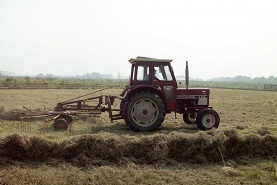
Many universities and innovative companies are looking for new ways to close the future protein gap for food and feed, and cover future protein demand on a sustainable basis. German … Read more
In February, BP published a new Energy Outlook. The main difference with previous outlooks lies in its renewable energy forecasts. The previous ones were scandalously low. The company partly redressed … Read more
These days, my inbox is overflowing with messages from concerned scientists warning that mankind cannot pursue economic growth forever; that it should deviate quickly from such a course, in order … Read more
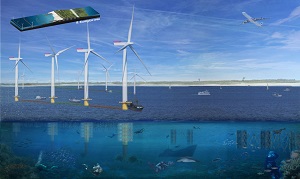
The world will have to take another look at renewable energy. We need to start thinking visionary and large-scale. Time is over when solar and wind energies had to adapt … Read more
Can food supply and access to clean water develop into geopolitical weapons, like fossil energy has been for many years? If so, we should see a structural imbalance between food … Read more
Renewable energy sources are by nature ready to harvest anywhere in the world, and therefore not a source of international conflict by themselves. However, they depend in part on critical … Read more
Geopolitics has long circled around reserves of fossil fuels, the most critical assets in a fossil-based world. But although they will be around for a few more decades, fossil fuels … Read more
Some energy analysts propose that system changes will seriously slow down the advent of sustainable and intermittent energy sources. Grid instability and/or its prevention would add appreciably to sustainable energy … Read more
In the early days of renewable energy development, its adversaries would tell the world that renewable sources would be hopelessly inadequate. Traditional (fossil and/or nuclear based) systems would be indispensable … Read more
Solar energy (photovoltaics, PV) is no longer that cute but hardly relevant technology of energy supply – it will evolve into the basis of our entire energy system. The world … Read more
Two factors are underrated again and again in energy policy: the potential of better energy efficiency (check here) and that of renewable energy. In our first column, we saw that … Read more
Many social scientists make an appeal to fundamental laws of nature in order to sustain their arguments. Fine, if their interpretation is tenable from a scientific point of view. But … Read more
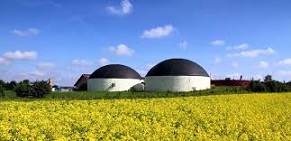
On this site we have always been concerned with the question of the shape and size of industry in a bioeconomy. Could it be much less dangerous? Concentrated in major … Read more
Phosphorus is an essential ingredient of life on earth. It is a component of DNA and of bones, and it fulfils a key role in energy transfer in living cells. … Read more
With great speed, genetic modification penetrates into our society – the biobased economy depends on it to a large extent. It does not evoke much discussion; ignorance and complacency abound. … Read more
Synthetic biology offers us a countless number of opportunities to reshape natural materials, and even our food. Yes, that would mean synthetic food. Many people would dismiss this right away … Read more
One of the main concerns about world food supply is the production of proteins. Lux Research, in a new study, suggests that ‘the current dominance of meat and seafood will … Read more
Energy efficiency is our cheapest energy source, with a very large potential. It has been so for forty years and will probably continue to be so for decades to come. … Read more
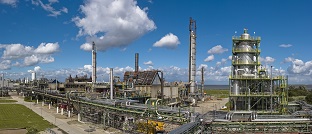
How will Europe, the Netherlands in particular, earn its income in twenty-five years’ time, in a sustainable way? How do we prepare for the world of 2040? By green growth, … Read more

Resistance towards innovative changes is a well-known problem. It troubles many researchers and entrepreneurs, also those who venture into the biobased economy. The science of systems innovation deals with the … Read more
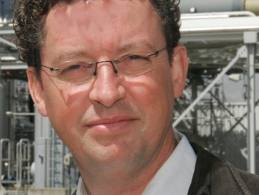
At the conference where the report ‘Opportunities for the fermentation-based chemical industry’ was published, we also talked to Marcel Wubbolts, DSM’s CTO and president of BIC (the Biobased Industry Consortium). … Read more
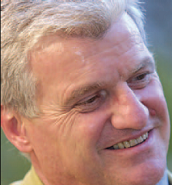
Claude Roy is a man who paints wide views with inexhaustible energy. As the chairman of the French Club des Bio-économistes his message, voiced for many years is that we … Read more
In my increasingly eurosceptical home country, The Netherlands, intellectuals take a renewed interest in Europe. The squarely pro-European essay by the Austrian author and essayist Robert Menasse has been translated … Read more
We are at a turning point in the energy transition, particularly as to the contribution of solar power, says Wim Sinke. So far, the instrument for opening up markets was … Read more
Most people, when talking about a sustainable future for Europe, think in terms of energy supply. That is one-sided. It is true: the energy conflict still deepens, as the incumbent … Read more
We are right in the middle of the most radical transition that our society can go through: that of a centralistic, fossil-fuelled society to a much more decentralised society mainly … Read more
Human error is the label stuck on accidents that cannot be directly explained by the failure of a device, be it mechanical, electric or electronic. But the other side of … Read more
Biobased resources and biochemical processes will change the appearance of chemical industry. Changes may occur in scale and in location. There will be a tendency towards a smaller scale. But … Read more
The recent report ‘Strategy for a green society’ (in Dutch) of the Scientific and Technological Committee for the biobased economy (WTC) puts an emphasis on biobased materials. Biobased materials are … Read more
After a few decades of research and development a halfway score is meaningful and, on headlines, very well feasible. For various reasons wind and biomass are showing their limits. Solar … Read more
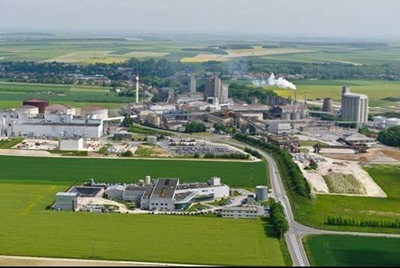
Even though countries differ appreciably in culture, everywhere in the world farmers growing wet crops organise in cooperative organisations. That will not be different in the biobased economy. On the … Read more
On August 18, we started a discussion on the development towards a smaller scale in the biobased economy. We continued this discussion in a LinkedIn group connected to www.biobasedeconomy.nl. What … Read more
Corporate strategies are a shaky basis for getting society on a sustainable track. They may change, if other strategies would incur more profit. The green CEO may be replaced by … Read more
Phosphorus is an essential element in the formation of vegetal and animal biomass. But whereas living organisms can use oxygen and nitrogen from the air for their processes, phosphorus is … Read more
Piezoelectricity is on the rise. Piezoelectric cells produce electricity from vibrations, or conversely vibrations from electricity. The former is relevant for energy harvesting, for our world increasingly needs the small … Read more
In the past few weeks, public discussion on shale gas in the Netherlands attained a new peak. Water utilities and brewers publicly favour a moratorium in view of risks for … Read more
Sustainability – here to stay, or the issue of the day? We think it is here to stay. All the more important to be very critical about sustainability, and the … Read more
There is a firm trend for centralization in decision making in our society. National governments increase their power at the expense of communities and counties; and Europe acts for more … Read more
Even though our highly technological society is vulnerable, this state of affairs is not much addressed by politics or societal debate. And vulnerable we are indeed. Think of the millennium … Read more
Five years after the Lehman Brothers bankruptcy, nothing has been done yet on the set of measures which were thought to be essential at the time; measures which boil down … Read more
Many scientists from the molecular sciences, like chemists and biotechnologists, regard the use of biomass for energy production almost as a capital sin. It would be equal to burning down … Read more
Energy throughput in the biosphere is very small, actually. Biomass production from incident light is relatively inefficient, also in Russian wood or Sargasso seaweed. The earth receives an amount of … Read more
‘The unsuccessful energy transition stands in the way of the biobased economy,’ says Jan Rotmans. ‘Whereas the energy sector is going to disappear. In the future transition, the chemical sector … Read more
Europe appears to be in a bad state. Poverty and unemployment are on the rise, the rich and the poor grow apart, the financial system is out of control. In … Read more
There will be more local self-supply or even autarky in the new world, for instance in energy systems. But whereas in the past, autarky equalled shortage and even poverty, in … Read more
Summing up, we arrive at our vision. New social patterns will be sustained by the development of new technologies, that will primarily promote local and regional economic growth. Sustainability is … Read more
Energy systems will revolutionise even more radically than industry. The price of solar cells has taken a dive. They are modular in makeup, i.e. they can be applied both on … Read more
The environmental movement of the seventies, precursor to the present movement for sustainability, was largely anti-technological. Technology seemed to be inherently large-scale; it produced nuclear power stations and polluting chemical … Read more
Sustainability has been a topic for some time: for forty years (counting from the ‘Limits to Growth’ report), or even for fifty years (counting from Rachel Carson’s ‘Silent Spring’). During … Read more