IPBES and after: do we need to fear global ecosystem decline?
A month ago, May 2019, a UN agency with the awkward acronym IPBES published a report on nature decline. It tells us: ‘nature and its vital contributions to people, which … Read more

A month ago, May 2019, a UN agency with the awkward acronym IPBES published a report on nature decline. It tells us: ‘nature and its vital contributions to people, which … Read more
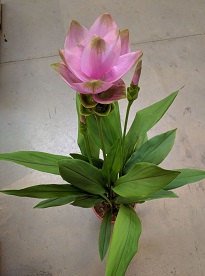
GreenTech 2019 is the major horticultural fair, to be held June 11-13 in Amsterdam. As they say themselves: ‘GreenTech 2019 brings people and technology together to increase growth, productivity, sustainability, inspiration … Read more
Solutions for global problems tend to become part of a compromise, says Huub de Groot. He is a professor in biophysical organic chemistry at Leiden University and works, among others, … Read more
As the debate on the energy transition heats up, stakeholders now retreat on their original positions, after a phase in which they politely listened to each other. Some call for … Read more
‘With our trade of indoor farming, we would like to contribute to the solution of global food problems,’ says Marc Kreuger of the Dutch company Seven Steps To Heaven. ‘That … Read more
World Wildlife Fund and plant-based food and drink producer Alpro published a report on how companies can reduce their environmental footprints. They go beyond general sustainability principles and address more … Read more
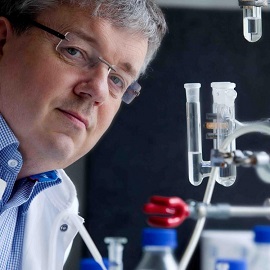
Through biosolar cells, researchers try to improve photosynthesis, the process through which plants, algae and some bacteria capture sunlight. The product of such ‘artificial leaves’ is hydrogen for instance, that … Read more
CCU, the process to capture carbon dioxide and upcycle it to valuable fuels, chemicals and materials, may become very important this century. CCU kerosene may be much better than biobased … Read more
It may take a long time before wind turbines will actually generate energy, even in a ‘technical landscape’, as our editor Paul Reinshagen called the Dutch province of Flevoland, an … Read more
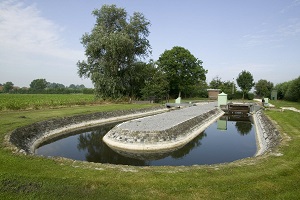
The use of microalgae for water purification is not widespread. Yet, they are very well capable of doing so, says Paul Hamm. Twenty-five years ago, he was involved as an … Read more
MaterialDistrict Rotterdam, the yearly exposition and conference on new materials, has 140 exhibitors this year, 200 new materials, presentations by 100 front-runner start-ups & designers, and op top of that … Read more
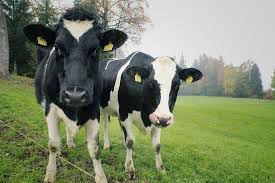
The world runs into planetary boundaries, or has transgressed them already. The three main problems can all be alleviated by a more efficient agriculture. Being: emission of greenhouse gases, excess … Read more
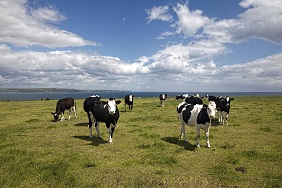
In September 2018, the Dutch minister for agriculture Carola Schouten announced that circular agriculture will become her main policy goal. Circular agriculture, also known as low external input farming, is … Read more
The birth of the hiv-resistant gentech twins Lulu and Nana in China has stirred up the debate on methods and results of modern biotechnology. Rightfully so. The gap between what … Read more
Five years ago, we visited the outstanding horticultural company Koppert Cress in Monster near The Hague in the Netherlands. Then already, general manager Rob Baan told us that horticulture should … Read more
We know that plants grow faster in CO2-rich environments. Horticulturalists enrich the atmosphere in their greenhouses with CO2 to ensure better productivity. Can we imagine fast growing plants that would … Read more
‘Again and again, new products fascinate us: the smartphone, the airplane wing that can be glued, new medicines,’ says Ton Schoot Uiterkamp, ‘but we do not think in terms of … Read more
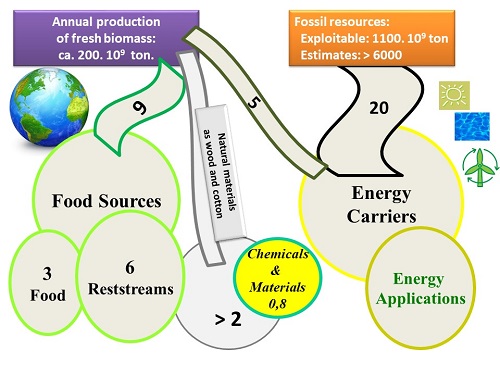
Why cannot we lift all barriers for the use of bioenergy? Because the energy sector is much larger than the food sector. The 20 billion tons of fossil fuels that … Read more

Since the turn of the century, there is a discussion raging on the limits to biomass use for energy purposes, in order to control man-made CO2 emissions. After having been … Read more
Fifty years ago, the Club of Rome was founded; in its own words ‘an organisation of individuals who share a common concern for the future of humanity and strive to … Read more
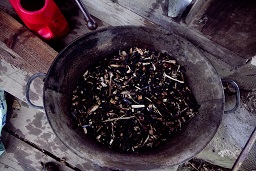
If business site Forbes devotes attention to a subject as esoteric as healthy soils, we know that there will be business in it. As science has discovered the importance of … Read more
The world needs to start purposely to restructure chemical industry in such a way that it is based on renewable carbon instead of fossil fuels, says nova-Institute in its latest … Read more
Anyone who opposes genetically modified (GM) food can tell you that ‘in France’ they found that GM maize causes cancer in rats. This study was conducted under leadership of Gilles-Éric … Read more
This year, August 1 is Earth Overshoot Day. Each year, this is the day at which mankind has used up its stock of biological resources for that year. Never has … Read more
In the entire discussion on biotechnological rejuvenation, very few researchers ask the question why this should be a goal worth pursuing. In a series of articles (July 25, July 28 … Read more
Biotechnology has now reached the point that some researchers target rejuvenation as their goal, ultimately in humans. With a slight hint of immortality behind the horizon. But if we look … Read more
What will come after healthy aging? In biotechnology, advances have been so swift over the past few decades, that some scientists have started thinking of ways to tackle aging itself, … Read more
Imitating nature’s engineering secrets at the nanoscale could lead to a host of useful applications, like energy saving materials. Biomimicry, also called bionics, uses structures found in nature to solve … Read more

Among the wonderful new materials with unexpected properties that will change our world is microcrystalline cellulose. I got a new perspective on it through the lecture of Stéphane Laurent at … Read more
Companies around the globe are building the biobased economy as they commercialize renewable chemicals and biobased products. Collectively, their progress has reached a tipping point for accelerated growth in the … Read more
An interesting article in the Guardian, last week, shed light on new strategies to combat insect attacks on food and commercial crops, through genetic modification. But in such a way … Read more
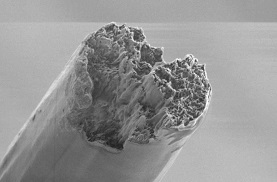
The strongest biomaterial ever has been assembled recently by Swedish, American and German researchers; it consists of cellulose, properly speaking of carefully parallel oriented cellulose nanofibrils (CNFs). The material is … Read more
In February, BP published a new Energy Outlook. The main difference with previous outlooks lies in its renewable energy forecasts. The previous ones were scandalously low. The company partly redressed … Read more
These days, my inbox is overflowing with messages from concerned scientists warning that mankind cannot pursue economic growth forever; that it should deviate quickly from such a course, in order … Read more
The many ways in which mankind can produce natural compounds with biotechnology, impresses me. Smells, tastes, maybe texture in the near future, remember the synthetic burger, they are excellently produced … Read more
Two concepts, the bioeconomy and the circular economy, have much in common but seem to belong to different universes. Proponents of the circular economy treat the bioeconomy as a fringe … Read more
Are sustainability and moralism always connected? Proponents of sustainability often suggest (rather than openly say) that it is immoral to pursue non-sustainable development paths – to put the future of … Read more
As global housing programs are gearing up, the world will need a staggering amount of construction material over the next few decades. This will put a strain on resources, and … Read more
Last January, the news that a Chinese team of scientists had cloned macaque monkeys drew a lot of attention. Discussion was quick – too quick – to focus on the … Read more
Textiles made from pineapple leaves, self-massaging clothes, dresses made from fungi… During Material Xperience 2018 (13-15 March, Ahoy Rotterdam), fashion professionals can enjoy the marvel and the opportunities of many … Read more
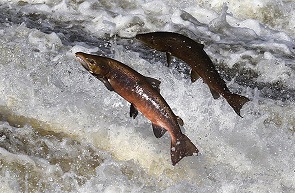
Omega-3 fatty acids have attracted a lot of attention from protagonists of healthy diets, and from the food industry as well – view their ads. Fatty fish like salmon and … Read more
Concrete degradation is one of the most costly problems of our time. Concrete will always crack, although less so if well-designed and well-constructed. Cracks will allow water and air to … Read more
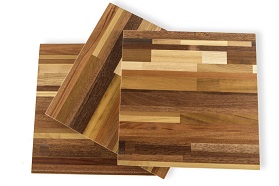
The 13th Material Xperience, ‘the world’s largest multisectoral materials exhibition’, will take place 13-15 March in Ahoy, Rotterdam. Tuned towards materials innovation, it will show materials in six categories: architecture, … Read more
Cement production by itself is responsible for a stunning 5% of total global CO2 emissions. As global construction activities still gear up, we urgently need more sustainable concrete, no longer … Read more
The latest Renewables Global Status Report contains an instructive paragraph on drivers for renewable energy development. Otherwise than many might expect, climate policy is not the most important driver anymore. … Read more
In our first article we concluded: as long as modified genes do not end up in the final product, nobody will oppose genetic engineering; even opponents of the technology will … Read more
IEA Global Energy Outlook 2017, released last November, marks a rapid development in the perspective on renewable energy. IEA has always downplayed the importance of renewable energy for future global … Read more
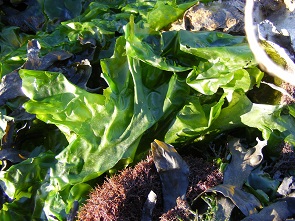
After an initial period in which ideas went in all directions, proponents of seaweed (macro-algae) in the bio-economy have now set down to the painstaking work of developing and fine-tuning … Read more
It is difficult to find out why exactly Friends of the Earth and Greenpeace, the two leading organizations in this field, oppose genetic engineering. Clearly it is important to them … Read more
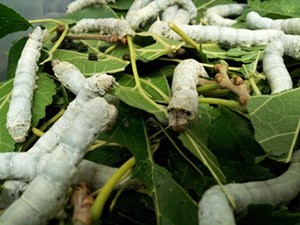
Whereas the two companies discussed in this series so far use fermentation technology to imitate silk, the American company Kraig Biocraft Laboratories uses the old workhorse, the silkworm. They introduced … Read more