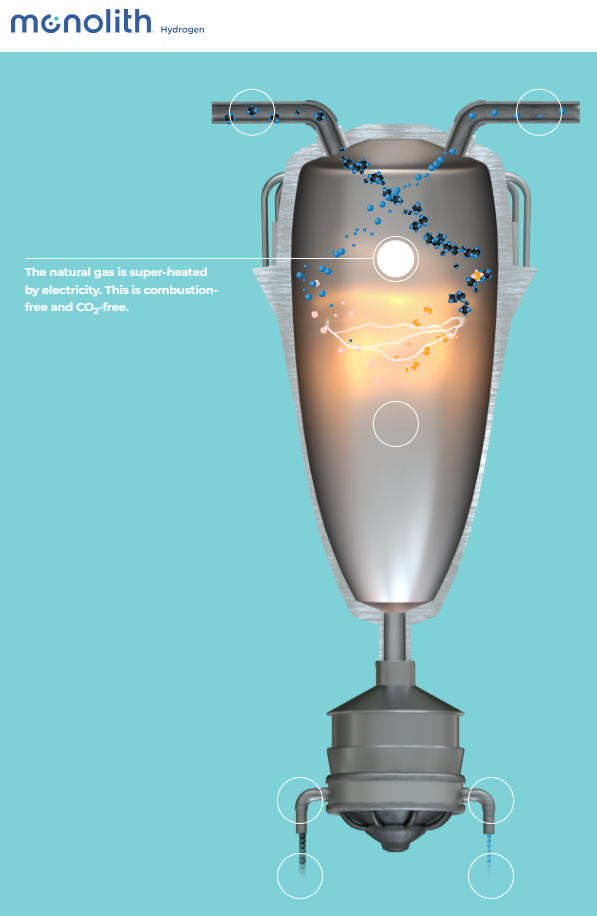
Methane pyrolysis turns a grey resource into a green one
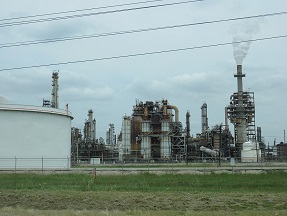
Bio is in. Chemistry is out. Green is in. Grey is out. And the Netherlands (my home country) should rid itself from its dependence on natural gas. These are popular opinions in ‘climate conscious’ circles. Yet there are ‘chemical’ processes that yield ‘green’ fuels. Methane pyrolysis is one of them. Almost all fuels emit CO2
European generic medicines production after corona
Directed evolution: a Nobel prize winning innovation
Frances Arnold won the 2018 chemistry Nobel prize for her research on directed evolution. Directed evolution speeds up nature’s variation and selection process, and researchers use it to find the best enzymes for industrial applications. As Arnold summed it up: ‘In directed evolution we provide a new niche in the laboratory, so to speak, and
Use more plastics, says Michael Carus, but responsibly
Michael Carus, managing director of the German nova-Institute, has stirred up the plastics debate. While plastic waste is piling up and the seas get filled with plastic soup, Carus makes a plea for the use of more plastics. A better use of plastics, properly speaking. The age of plastic has just begun In an interview
Towards eco-friendly personal care, and other BIO highlights
Eco-friendly personal care is one of the topics in the coming BIO World Congress on Industrial Biotechnology in Des Moines, Iowa, July 8-11. Other topics include of course biotechnology and genetic modification, and the future of agriculture. Organized by BIO, ‘the world’s largest trade association representing biotechnology companies, academic institutions, state biotechnology centres and related
Can we engineer life? 3.1 Transition is unavoidable
‘Education is the most powerful weapon which you can use to change the world’ (Nelson Mandela). Hans Tramper is professor emeritus in Bioprocess Technology at Wageningen University and reflects on the development of his subject in a series of essays. His pieces were published so far on 18 June, 30 June, 11 July, 22 July,
Renewable carbon, the key to a sustainable chemical industry
The world needs to start purposely to restructure chemical industry in such a way that it is based on renewable carbon instead of fossil fuels, says nova-Institute in its latest position paper. Chemical industry cannot ‘decarbonize’ as the energy sector can, as it is all about carbon. But it can move over to use renewable
Biobased building blocks: an update
Biobased chemical building blocks go through a difficult phase: with falling crude oil prices over the past years, these chemicals had a hard time to remain competitive to fossil-based chemicals. Nevertheless, a nova Institute report predicted an 8% p.a. growth across the board for them in the five years to come. Last month, nova Institute