Circular economy: bio-plastics have an issue
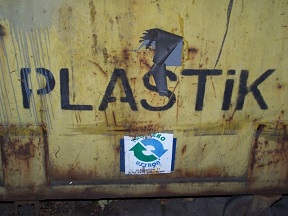
Plastics in the Circular Economy are hot. The last EFIB-conference in October 2019 featured a track dedicated to ‘The future of plastics’. The last edition of Dutch magazine Agro&Chemie also featured an article on bio-plastics. And the recently announced European Green Deal includes a focus on the plastics industry because it is resource intensive. Based
Resolve-project develops bio-based alternatives for hazardous solvents
During a workshop at the latest European Forum on Industrial Biotechnology (EFIB) in Brussels, the BBI JU funded ReSolve-project introduced a number of newly developed, less hazardous, viable bio-based renewable solvents. These new solvent molecules proved to have better performance than their fossil counterparts. ReSolve also developed innovative methodology to assess the chemical, physical, safety
Education on strike
Dutch primary education has a huge problem, that also affects bio-economy developments. There’s a substantial shortage of teachers, the teaching profession is not appreciated much, and the pay gap with secondary education is decently described by the sector as ‘not appropriate’. Emergency measures like shorter school weeks or even closure of schools are not unthinkable
Introspection and innovation don’t easily match: ‘In the Netherlands we tend to think we are pretty good.’
The Dutch Cabinet has determined missions to tackle major societal issues, and Dutch knowledge sectors are currently drawing up Knowledge and Innovation Agendas on how to support the realisation of these missions. I just finished reading the joint innovation agenda by the three top sectors Agriculture, Water and Food, and was left with a vague
When upcycling, reach for the moon
In September 2016, Henk Kamp, then Minister of Economic Affairs in the Netherlands, opened Upcycling Gemert, a plant that processes mushroom waste into compost, fuel and heat. Only two weeks later, a press release announced another project, called BIOrescue, that aims to upcycle the same mushroom waste by creating new bio-based products. Although I was
Improve sustainability without damaging the brand
The past World Bio Markets Conference in Amsterdam proved an interesting happening, not so much because of what was said, but more explicitly because of what was not dealt with. Sustainability was the overarching conversation topic of the conference. Although sustainability is a broad and complicated concept, companies seem to limit themselves to only a
Do not avoid risks, but contain them
Brexit and The Wall not only generate news. These issues also provide for interesting comments that ultimately can apply to other, or much broader, areas like the bio-economy. Where continuous development is hampered by risk aversion, learning to identify and manage risks better is a necessity. I read a striking comment by CNN’s Chris Cillizza


New Call for Proposals issued by BBI JU
The Bio-based Industries Joint Undertaking, BBI JU, one of seven JUs under the Horizon2020 program, recently published their next Call for Proposals, the sixth one on the path towards 2020. At an info day in Brussels, visited by over 600 attendees, the organization presented and explained its latest Call. Under the influence of results from
on: 19 May 2019