Multiple use of biomass

Cascading biomass is the latest policy term for a multiple use of biomass, a use that starts ‘at the top’, in some material form (e.g. furniture or bioplastics) and ends … Read more

Cascading biomass is the latest policy term for a multiple use of biomass, a use that starts ‘at the top’, in some material form (e.g. furniture or bioplastics) and ends … Read more
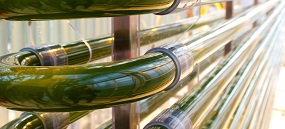
The twelfth Dutch Biobased Economy network gathering in Amsterdam, yesterday, radiated optimism. Not in the least because of the positive messages from those two award-winning flagships of the biobased economy … Read more
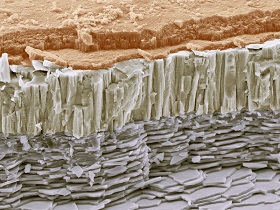
Green chemistry is not just another science than the existing, fossil-based chemistry; green chemistry represents another philosophy as well. Whereas chemical industry now tries to synthesise complex substances from simple … Read more
A decade ago, in an authoritative scientific magazine, we published a prediction (1) on the synthesis of complicated molecules, primarily medicines. We foresaw the integration of chemo and bio catalysis … Read more
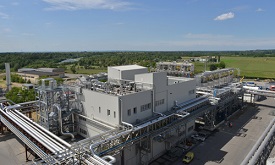
One often gets the impression that all fascination for modern technology concentrates on ICT: robots, self-steering cars, mobile phones and their apps. Green chemistry, a breakthrough technology too, gets little … Read more
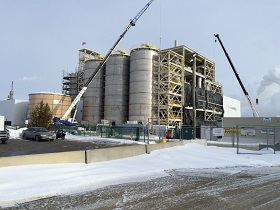
More than once, we devoted our attention to the negative impact of biofuels policy on the biobased chemical industry. New calculations by Nova Institute now show that in the bioeconomy, … Read more
Biofuels had an obvious appeal when oil prices were well over $ 100 a barrel. Developers thrived and almost a thousand flowers started to blossom. But then oil prices plummeted … Read more
Last month, the European Parliament finally agreed on a new compromise on the use of biomass for energy. Nova Institute listed the main effects of the new regulations on the … Read more
So far, the laws of marketing have been insufficiently dealt with in our articles on biotechnologically produced food, and consumer reaction to it. In marketing, all revolves around a very … Read more
A ‘disruptive technology’, that is what Elevance Renewable Sciences calls the metathesis reaction on which the company is built; never omitting the proud words ‘Nobel Prize winning’ (Chemistry, 2005). They … Read more
Last year, Friends of the Earth launched a campaign called ‘Extreme Genetic Engineering in Your Ice Cream?’, directed against ‘natural’ vanillin produced by genetically modified yeasts. It got assurances from … Read more
This site recently ran fine stories about more sugar, soon on the market in North-western Europe; industry will process that to bioethanol and further to bioethylene, with ethylene oxide and … Read more
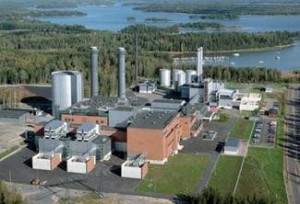
At EFIB, last October, the most brilliant lecture – in my humble opinion – was delivered by Johanna Buchert, a Finnish professor who works at VTT, the Technical Research Centre … Read more
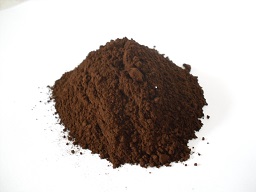
Just a few years ago, bio aromatics seemed far away. Aromatic compounds could be so easily extracted from (fossil-based) naphtha, that bio aromatics seemed to be a dream for the … Read more
Among the surprising new companies in the biobased industry is certainly Inbiose. This spin-off from Ghent University specialises in specialty carbohydrates: very complex structures consisting of a precisely controlled sequence … Read more
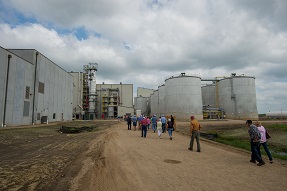
The BioBased Materials and Chemicals (BBMC) sector has clearly recovered from the 2008 setback, when many start-ups performed less than expected and many went bankrupt. Investment is on the rise … Read more

‘As a company, we want to feed the world, save CO2, move to a greener and more biobased economy, improve lives. But we always want to remain innovation-based and bring … Read more
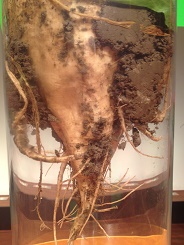
This is going to be another story than told so far about the development of a green chemical industry in Europe. So far, the news was mostly negative: too little … Read more
The Italian petrochemical group Versalis is working on the conversion of two European sites. It has decided to develop itself, particularly in the biobased materials. Versalis, the chemical department of … Read more

Butadiene is an important petrochemical with a market size of more than $40 billion, and around 60% of butadiene goes into synthetic rubber production. The relatively recent exploitation of shale … Read more
In the end of 2013, EuroBioRef came to a close, a major European R&D project in the field of biorefinery. The project included 29 partners in 15 countries and had … Read more

Cosmetic industry takes a renewed interest in biobased resources. Plant-based materials are ‘in’. Not merely because they are in public demand – also because biorefinery delivers a growing supply of … Read more
As companies strive to be more sustainable, their customers might grow more critical on their performance rather than less, asking questions that were never raised. At least, that is what … Read more
Whereas world capacity for biobased chemicals and materials is rapidly growing, Europe clearly lags behind. Lux Research, a Boston based company, expects a doubling of global biobased capacity in 2017 … Read more
There is a very strange body of regulation for biobased innovation subsidies. These rules seem to be exclusively intended to direct biomass and agricultural wastes to the energy sector, ignoring … Read more
‘The unique feature of our centre is the cooperation with the excellent plant science and green chemistry centres in our University,’ says Joe Ross, Director of the Biorenewables Development Centre … Read more
Europe’s biofuel policy has been reformulated earlier this year, in order to promote the development of second-generation biofuels. But this seems to have little effect: whereas second-generation biofuels from food … Read more
At EFIB, it was a surprise to me as a Dutchman, living in a country where agriculture is mainly about food crops, to learn that wood biorefinery is important in … Read more
Agriculture, with its renewable feedstock, materials, textile fibres, food products and medicinal plants, has been the supplier of mankind with its livelihood for ages. By innovations, agriculture will again take … Read more
The policy in support for biobased energy proves to be an obstacle to better applications of biomass, in the view of BioBTX and KNN, two Groningen based companies. This policy … Read more
The European Parliament has decided. The share of biofuels in the fuel mix will be reduced from 10 to 6% in 2020. Is that disastrous or beneficial, on the contrary? … Read more

Just a month ago, on August 3rd, we wrote that the European sugar market will open up in 2017, and that in preparation for that event, Dutch farmers/cooperatives now already … Read more

Willem Sederel, manager of the Biobased Delta, situated in the South-western part of the Netherlands, shows no doubt as he indicates the biobased economy as the prime development model for … Read more
Use of biomass feedstock for chemicals and biofuels? The food/fuel discussion is very polarised. But a number of parties have come forward that seek a middle ground in this debate. … Read more
In our minds, Photanol is one of the potential winners among start-ups, the company owned by professors Joost Texeira de Mattos and Klaas Hellingwerf of the University of Amsterdam. Their … Read more
A room in the Chemical Lab of Groningen University (RUG) hosts a revolutionary test equipment. It produces bioBTX through chemical catalysis. This is a mixture of benzene, toluene and xylene, … Read more
If shale gas would have entered the US market five years earlier, this might have had very adverse consequences for the entire biobased economy (BBE). It might even have been … Read more
‘I expect artificial photosynthesis to be fully operational in 2050; by that time it will be the backbone of energy supply,’ says Huub de Groot, professor in biophysical organic chemistry … Read more
Energy throughput in the biosphere is very small, actually. Biomass production from incident light is relatively inefficient, also in Russian wood or Sargasso seaweed. The earth receives an amount of … Read more
The very moment Kenneth Epstein, an American venture capitalist, proved by solid data that the biobased economy in the United States is waning, a Reuters message arrived in our e-mail, … Read more
It is just a small company, BioAmber, and it is quite young as well. Yet, is has concluded a large number of cooperation agreements, and many chemical companies are interested. … Read more
Carbon dioxide is not a waste material but a feedstock. That was the idea behind the German nova-Institut’s conference, one of the first CO2-conferences to be held in Europe. And … Read more
Will shale gas – soon to be in abundant supply – become a threat to the green chemical industry? Jos Keurentjes (AkzoNobel) judges it too early to make a verdict. … Read more
The Austrian healthcare Biotech SME ProtAffin AG and the French Global Bioenergies are the joint winners of the Most Innovative Biotech SME Award 2012. EuropaBio names three other outstanding runners … Read more
Until quite recently, a few developments seemed to be clear, at least to the editors of this website. The economy would become more sustainable by finding alternatives for oil (over … Read more
Mark Bünger, author of the recent Lux Research report on biochemicals and biomaterials (see the article on this site), holds the opinion that the viability of a green chemical industry … Read more
There still are many obstacles on the road to a fully commercial green chemicals industry. That is the upshot of a study by Boston based Lux Research, ‘Pruning the Cost … Read more
On August 17, 2012, BASF, Cargill and Novozymes signed an agreement to develop technologies to produce acrylic acid from renewable raw materials. Presently, acrylic acid is produced by the oxidation … Read more
A recent report by the German Academy of Sciences Leopoldina (discussed here on the 10th of august by Diederik van der Hoeven) argues in favour of selective energetic usage of … Read more