Covid-19: take care of each other
At present, the world is under the spell of a new influenza virus, Covid-19. One region after another goes into complete lockdown; in particular to prevent the virus to spread … Read more
At present, the world is under the spell of a new influenza virus, Covid-19. One region after another goes into complete lockdown; in particular to prevent the virus to spread … Read more
Reading the book Naturally! Of course. How nature always keeps surprising us (in Dutch) by Alle Bruggink and Diederik van der Hoeven was a great pleasure to me. Even stronger, … Read more
Reductionism, reducing issues to little fragments, is at the basis of our present wealth. It also has a major influence on our social behaviour and our worldview. This may take … Read more
Science rests on reductionism: the reduction of complex issues to digestible bits. From there, researchers try to piece together the bigger picture. But in the life sciences we now see … Read more
Am I mistaken, or is there really a gradual shift taking place among opinion leaders in favour of genetic modification? Or is it just my perception that changes? Meaning: do … Read more
At the moment, the Netherlands suffer from the oak processionary. Or, as one commentator put it: it has been causing a lot of trouble over the past few years, but … Read more
Photosynthesis is one of the most important biological processes on earth, if not the most important one: no life without photosynthesis! The Rubisco enzyme plays a key role in this … Read more

The Bio-based Industries Joint Undertaking, BBI JU, one of seven JUs under the Horizon2020 program, recently published their next Call for Proposals, the sixth one on the path towards 2020. … Read more
Brexit and The Wall not only generate news. These issues also provide for interesting comments that ultimately can apply to other, or much broader, areas like the bio-economy. Where continuous … Read more
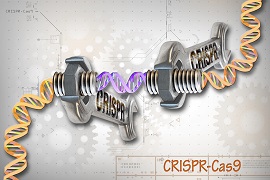
The quest for engineering life is an infinite ‘marketplace’ for science, commerce and society. They are the very stakeholders that will have to decide on the rules of the game: … Read more
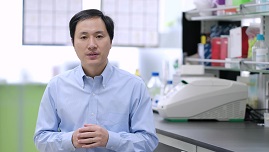
The birth of the hiv-resistant gentech twins Lulu and Nana in China has stirred up the debate on methods and results of modern biotechnology. Rightfully so. The gap between what … Read more
The Bio-Based Industries Joint Undertaking, abbreviated as BBI JU, is in the final stages of the procedure to award funding for new research and development proposals. BBI JU is a … Read more
‘Again and again, new products fascinate us: the smartphone, the airplane wing that can be glued, new medicines,’ says Ton Schoot Uiterkamp, ‘but we do not think in terms of … Read more
In September 2017, the FAO released a report on hunger in the world. According to this report, in 2016 11% of the global population experienced hunger, i.e. 815 million people, … Read more
Fifty years ago, the Club of Rome was founded; in its own words ‘an organisation of individuals who share a common concern for the future of humanity and strive to … Read more
‘Education is the most powerful weapon which you can use to change the world’ (Nelson Mandela). Hans Tramper is professor emeritus in Bioprocess Technology at Wageningen University and reflects on … Read more
BiofuelsDigest, the world’s most widely read biofuels daily, as they proudly claim, concluded in May this year that ‘The pace of invention and change is just too strong … to … Read more
In the entire discussion on biotechnological rejuvenation, very few researchers ask the question why this should be a goal worth pursuing. In a series of articles (July 25, July 28 … Read more
Biotechnology has now reached the point that some researchers target rejuvenation as their goal, ultimately in humans. With a slight hint of immortality behind the horizon. But if we look … Read more
What will come after healthy aging? In biotechnology, advances have been so swift over the past few decades, that some scientists have started thinking of ways to tackle aging itself, … Read more
An interesting article in the Guardian, last week, shed light on new strategies to combat insect attacks on food and commercial crops, through genetic modification. But in such a way … Read more
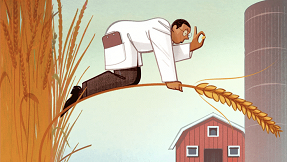
The real sustainability revolution in farming is New Breeding Techniques like CRISPR. Why are organic farmers blocked from using them? This article by David Warmflash was originally published on the … Read more
Some two months ago, Dutch newspaper NRC Handelsblad opened with the news that biodiesel caused accelerated corrosion of unlined steel storage tanks in use at Dutch petrol stations. Being a … Read more
The many ways in which mankind can produce natural compounds with biotechnology, impresses me. Smells, tastes, maybe texture in the near future, remember the synthetic burger, they are excellently produced … Read more
Two concepts, the bioeconomy and the circular economy, have much in common but seem to belong to different universes. Proponents of the circular economy treat the bioeconomy as a fringe … Read more
Last January, the news that a Chinese team of scientists had cloned macaque monkeys drew a lot of attention. Discussion was quick – too quick – to focus on the … Read more
Upon evaluating my visit to the 10th EFIB conference in Brussel, last October, I realized there was a disappointingly limited number of new and interesting topics. Many of the topics … Read more
One of today’s economic bestsellers is Doughnut Economics, written by the British economist Kate Raworth. Her book is an outright attack on the dominant neoliberal economic theory. Permanent growth is … Read more
Encouraged by Dutch top scientist Robbert Dijkgraaf, some internationally reputed scientists got a podium on TV to fantasise on the future, last 16 July. They gave their imagination free rein. … Read more
Mankind will have to grow more food on less land, so Hidde Boersma and Joost van Kasteren argue in the recently published volume (in Dutch) Ecomodernism, Rethinking Green and Growth. … Read more
There’s always a time lag between the development of a new technology and a dawning awareness of its social impact. Then follows a debate among scientists, possibly followed by a … Read more
The term bioplastics causes much confusion and will continue to do so, according to my conviction. The public does not seem to grasp the difference between bio as in biobased … Read more
A number of American companies offer Do-It-Yourself genetic engineering kits on the internet, in order to practice Synthetic Biology and Biological Design at home. With these biokits one can alter … Read more
In her lecture at the European Forum for Industrial Biotechnology (EFIB), last October in Glasgow, Professor Dame Anne Glover, Vice-Principal External Affairs, University of Aberdeen, lectured about effectively communicating about … Read more
According to Piet Borst, a highly respected Dutch cancer researcher, those deserving to receive the Nobel Prize for the development of CRISPR-Cas technology, will not get it. With that he … Read more
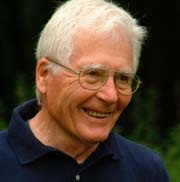
In his book The Revenge of Gaia (2006) James Lovelock reasserts his idea that the earth, living and mineral, is a self-regulating system. A system that is now put to … Read more
Imprisonment is the worst criminal punishment available to a European citizen. The long-term loss of freedom is loathsome for human beings, and the incarcerated almost always long for freedom. That … Read more
Recently Ecover, the ‘sustainable cleaning company’, announced a plan to use oil from genetically modified algae as a feedstock for their detergents. They were denounced in the strongest terms by … Read more
Scientists again called for a slowdown of gene technology, last August in Science. A group of 26 researchers called for safety measures in the area of gene drives. As a … Read more
Many social scientists make an appeal to fundamental laws of nature in order to sustain their arguments. Fine, if their interpretation is tenable from a scientific point of view. But … Read more
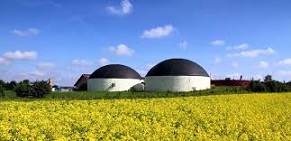
On this site we have always been concerned with the question of the shape and size of industry in a bioeconomy. Could it be much less dangerous? Concentrated in major … Read more
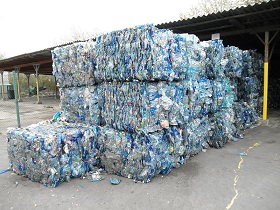
Early this year, the Ellen McArthur Foundation published a policy report ‘The New Plastics Economy, Rethinking the Future of Plastics’. This is an important document, as it wraps up responsible … Read more
With great sadness we announce that Paul Reinshagen has passed away, one of the founders and editors of this website. He died this week, 78 years of age. Paul Reinshagen … Read more
Last week, Reverdia and BioAmber announced that they signed a ‘non-assert agreement’. The companies are both involved in the production and commercialisation of biobased succinic acid. They agreed that BioAmber … Read more
When in the seventies the discussion on the environmental problem erupted, Wiero Beek, then research director at Unilever, was one of the first industrialists who took the problem seriously. He … Read more
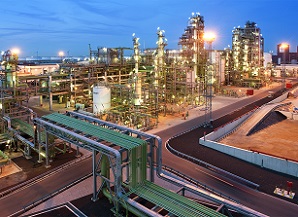
Recently I attended several biobased networking events where utilization of waste and by-products was discussed. I found these interesting talks; both because my company Abstraction partners with ARN to supply … Read more
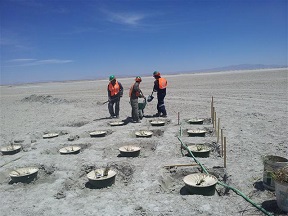
Ecomodernism! It could be a breakthrough in the stalemate between proponents of economic growth and those of radical reforms, e.g. to prevent climate disasters. The term combines elements of both … Read more
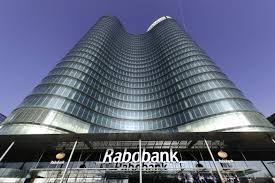
Poor Rabobank! Potentially it is one of the main financiers of the biobased economy. But will it have to say goodbye to its successful cooperative model, whereas the biobased economy … Read more
In the tension between sustainability and efficiency something strange is going on: it seems as though the concepts belong to two different worlds, with separate languages. As becomes apparent from … Read more
Today and tomorrow is Global Divestment Day, the day when concerned citizens around the world ask institutional investors like universities and pension funds to withdraw their investments from fossil fuel … Read more