Don’t panic over oak processionary
At the moment, the Netherlands suffer from the oak processionary. Or, as one commentator put it: it has been causing a lot of trouble over the past few years, but … Read more

At the moment, the Netherlands suffer from the oak processionary. Or, as one commentator put it: it has been causing a lot of trouble over the past few years, but … Read more

Eco-friendly personal care is one of the topics in the coming BIO World Congress on Industrial Biotechnology in Des Moines, Iowa, July 8-11. Other topics include of course biotechnology and … Read more
A month ago, May 2019, a UN agency with the awkward acronym IPBES published a report on nature decline. It tells us: ‘nature and its vital contributions to people, which … Read more

The past World Bio Markets Conference in Amsterdam proved an interesting happening, not so much because of what was said, but more explicitly because of what was not dealt with. … Read more
World Wildlife Fund and plant-based food and drink producer Alpro published a report on how companies can reduce their environmental footprints. They go beyond general sustainability principles and address more … Read more
Bringing nature back into cities, in the form of trees, can help fight global warming. Climate change is the challenge of the century. The last UN Environment Emissions Gap Report … Read more
The urgency of effective political action on the energy transition lies close to my heart. We should reduce the use of fossil fuels at the shortest notice possible. I feel … Read more
It may take a long time before wind turbines will actually generate energy, even in a ‘technical landscape’, as our editor Paul Reinshagen called the Dutch province of Flevoland, an … Read more
Widely reported studies this year and last led to headlines globally of an ‘insect Armageddon.’ The real story of insects is more nuanced — but probably just as unsettling. This … Read more
Five years ago, we visited the outstanding horticultural company Koppert Cress in Monster near The Hague in the Netherlands. Then already, general manager Rob Baan told us that horticulture should … Read more

Every year the European car industry uses around 80,000 tonnes of wood and plant fibres to reinforce composites, instead of synthetic fibres like glass and carbon fibre. Biocomposites have become … Read more
We know that plants grow faster in CO2-rich environments. Horticulturalists enrich the atmosphere in their greenhouses with CO2 to ensure better productivity. Can we imagine fast growing plants that would … Read more

Modern history is full of stories of new chemicals sold on a large scale and afterwards causing problems. Sometimes, this causes a major upheaval. But by far the largest poisoning … Read more
‘Again and again, new products fascinate us: the smartphone, the airplane wing that can be glued, new medicines,’ says Ton Schoot Uiterkamp, ‘but we do not think in terms of … Read more
Some proponents of affordable housing may be under the impression that sustainable homes are more expensive to construct and maintain than those built using traditional means. However, there are actually … Read more

Since the turn of the century, there is a discussion raging on the limits to biomass use for energy purposes, in order to control man-made CO2 emissions. After having been … Read more
Fifty years ago, the Club of Rome was founded; in its own words ‘an organisation of individuals who share a common concern for the future of humanity and strive to … Read more
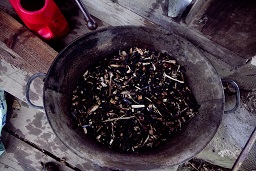
If business site Forbes devotes attention to a subject as esoteric as healthy soils, we know that there will be business in it. As science has discovered the importance of … Read more
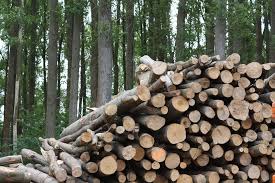
The world needs to start purposely to restructure chemical industry in such a way that it is based on renewable carbon instead of fossil fuels, says nova-Institute in its latest … Read more
This year, August 1 is Earth Overshoot Day. Each year, this is the day at which mankind has used up its stock of biological resources for that year. Never has … Read more
Mycorrhiza fungi increase yields in a targeted and environmentally friendly way, robots help farmers to control weeds ecologically. Smallholders optimise outputs with sensors in the soil and with modern biorefineries. … Read more
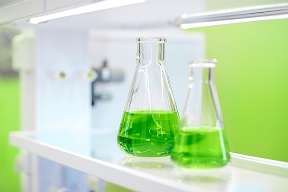
Driven by government regulations and concerns regarding environmental preservation and depletion of natural resources, the bio-based solvents industry has faced an exponential rise in demand and a push towards the … Read more
The impact of the new technologies, such as robotics, drones and Artificial Intelligence (AI) is revolutionizing our food production system. Precision farming has shaken up a number of large companies … Read more
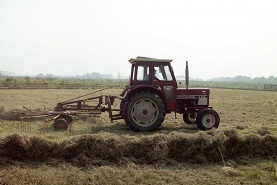
Many universities and innovative companies are looking for new ways to close the future protein gap for food and feed, and cover future protein demand on a sustainable basis. German … Read more
In February, BP published a new Energy Outlook. The main difference with previous outlooks lies in its renewable energy forecasts. The previous ones were scandalously low. The company partly redressed … Read more
These days, my inbox is overflowing with messages from concerned scientists warning that mankind cannot pursue economic growth forever; that it should deviate quickly from such a course, in order … Read more
The many ways in which mankind can produce natural compounds with biotechnology, impresses me. Smells, tastes, maybe texture in the near future, remember the synthetic burger, they are excellently produced … Read more

A new sustainable initiative in Bristol, in the UK, uses bio-based materials to face the need for additional and affordable housing supply: bio homes. Bristol is at the forefront of … Read more
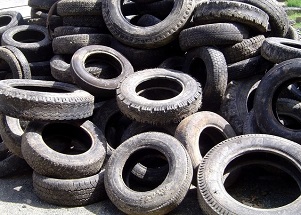
Every year, around a billion scrap tyres reach the end of their useful lives around the world. Many of these end-of-life tyres end up clogging landfills, providing breeding grounds for … Read more
Two concepts, the bioeconomy and the circular economy, have much in common but seem to belong to different universes. Proponents of the circular economy treat the bioeconomy as a fringe … Read more
Are sustainability and moralism always connected? Proponents of sustainability often suggest (rather than openly say) that it is immoral to pursue non-sustainable development paths – to put the future of … Read more
As global housing programs are gearing up, the world will need a staggering amount of construction material over the next few decades. This will put a strain on resources, and … Read more
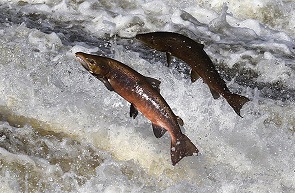
Omega-3 fatty acids have attracted a lot of attention from protagonists of healthy diets, and from the food industry as well – view their ads. Fatty fish like salmon and … Read more
Concrete degradation is one of the most costly problems of our time. Concrete will always crack, although less so if well-designed and well-constructed. Cracks will allow water and air to … Read more
Cement production by itself is responsible for a stunning 5% of total global CO2 emissions. As global construction activities still gear up, we urgently need more sustainable concrete, no longer … Read more
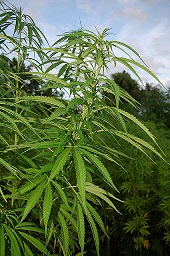
The ecological properties of hemp makes it one of the types of insulation used in construction with the lowest carbon emissions footprint. A relatively recent interest in hemp as a … Read more
In our first article we concluded: as long as modified genes do not end up in the final product, nobody will oppose genetic engineering; even opponents of the technology will … Read more
It is difficult to find out why exactly Friends of the Earth and Greenpeace, the two leading organizations in this field, oppose genetic engineering. Clearly it is important to them … Read more
One of today’s economic bestsellers is Doughnut Economics, written by the British economist Kate Raworth. Her book is an outright attack on the dominant neoliberal economic theory. Permanent growth is … Read more
In a first article, we proposed that plastic waste should no longer exist in ten to fifteen years from now. This ambitious goal needs to be tackled from two sides: … Read more
Geopolitics has long circled around reserves of fossil fuels, the most critical assets in a fossil-based world. But although they will be around for a few more decades, fossil fuels … Read more
It is an unfortunate fact that clothes, even those made of organic, low impact or recycled materials, are often not reused or recycled themselves. The majority end up in landfill … Read more

Researchers of the University of Bath (UK) and ModCell Ltd have developed straw as a low-impact and viable modern building material. As they say, ‘our research has made affordable, environmentally-friendly … Read more
Last 15 September the first Kipster opened its doors in Venray, the Netherlands, a chicken farm that calls itself ‘the most animal friendly and sustainable chicken farm in the world’. … Read more
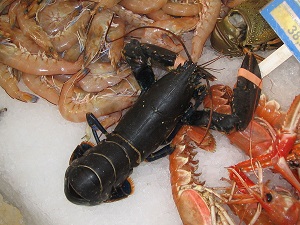
On August 5, the Biofuels Digest ran a story on chitosan, an exciting biobased substance with a bright future, almost unknown to the public so far (and unfortunately, also to … Read more
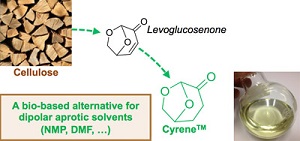
Cyrene is a biobased solvent intended to substitute toxic solvents in fine chemistry and pharmaceutical industries. It is produced by Circa, an Australian company that has partnered with the Green … Read more
Another major study on neonicotinoids (neonics) was published in Science, last month. It sparked vehement comments from groups like Greenpeace and Friends of the Earth who want no neonics, as … Read more

At the Bio-Based Materials conference in Cologne, organised by nova-Institute, a special material came in second at the election of the bio-based material of the year: Paptic®. ‘The next generation … Read more
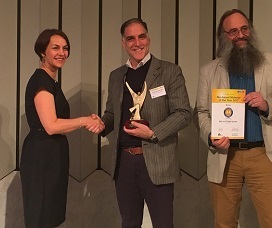
The International Conference on Bio-based Materials, an annual highpoint on the bio-based industry’s calendar hosted by Germany’s nova-Institute, was held this year for the tenth time, in Cologne, Germany. As … Read more
Neonicotinoids tend to have a detrimental effect on bees and other pollinating species – unsurprisingly so, because these ‘neonics’ (at a much higher concentration) are designed to kill insects. But … Read more