Scale issues in the energy transition
The energy transition has progressed quite a bit. To the extent that we can predict the outcome: renewable energy sources will win. But the real problems are surfacing now. The … Read more
The energy transition has progressed quite a bit. To the extent that we can predict the outcome: renewable energy sources will win. But the real problems are surfacing now. The … Read more
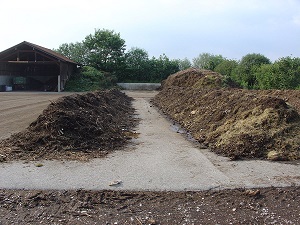
In Europe, just 16% of bio waste is processed to some form of useful application. Meaning: food and garden waste. An upcoming report by the Biobased Industries Consortium and Zero … Read more
We met Wijnand Schonewille many times at biobased economy conferences – we, the late Paul Reinshagen and I. And we talked, because Wijnand had refreshing ideas and innovative views. He … Read more
In the neoliberal climate that has reigned the past two decades, better efficiency was the ultimate goal of economic policy. So important that it could hardly be challenged. Competing concepts … Read more
PHAs are versatile, biodegradable and promising, we wrote a few years ago. There was just one problem: they were not competitive. So demand didn’t develop. And therefore, they remained not … Read more
Bio is in. Chemistry is out. Green is in. Grey is out. And the Netherlands (my home country) should rid itself from its dependence on natural gas. These are popular … Read more
It its latest report, Boston-based Lux Research investigates a global and sustainable energy infrastructure. Can areas with high energy demand but not endowed with much domestic wind and solar energy … Read more
The Waltzing with Nature manifesto is a logical sequel to the recent books by the authors, Alle Bruggink and Diederik van der Hoeven. Particularly to their latest book Naturally! Of … Read more
By the end of 2019, both USA and EU became aware of their dependence on China and India in generic medicines supply. Particularly the dependence on China was judged to … Read more
The major pharmaceutical industry is going through a difficult time. Industry should find a new track. Biomedicines could open up a new chapter. This is the third of four articles … Read more
The major pharmaceutical industry (big pharma) is going through a difficult time. Industry needs to come on track again. Can the new superpowers India and China lead the way? This … Read more
Major pharmaceutical companies (big pharma) are having a difficult time. Shareholders complain about falling profit margins; governments, insurance companies and patients complain about sky-high medicine prices. Industry should find a … Read more

Sustainable biomass is a subject dominated by strong and enduring disagreement. Michael Moore’s latest film Planet of the Humans is a recent reminder of that. In the Netherlands, always looking … Read more
In the 100th year of his life, James Lovelock wrote an important book: Novacene, The Coming Age of Hyperintelligence. A book that astonishes by the broad view of the author. … Read more
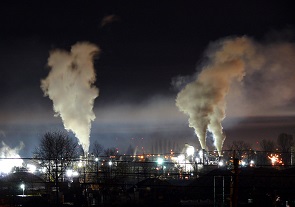
Will the corona pandemic speed up the energy transition? The question is much debated. Those who would like to accelerate the transition seem to have the upper hand, if we … Read more

Biobased Press published its manifesto ‘Waltzing with Nature’ on May 1, 2020. In this manifesto, we testify to the importance of science for solving mankind’s major global problems. Like … Read more
Frances Arnold won the 2018 chemistry Nobel prize for her research on directed evolution. Directed evolution speeds up nature’s variation and selection process, and researchers use it to find the … Read more
Reductions in resource use, emissions, and waste production are key strategies for corporate success. Sustainability is crucial, says Lux Research, a Boston-based technology development and advisory company. Sustainability is crucial … Read more
Recently, Knowable Magazine devoted an article to the question how far conventional agriculture is on the way to becoming more sustainable. The problem is: conventional agriculture pollutes too much (fertilizer … Read more
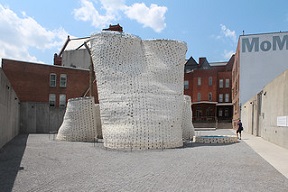
Quietly, industry is perfecting the art of using mycelium as a construction material. Mycelium is the invisible part of mushrooms: their ‘roots’ that consist of minuscule threads called hyphae. There … Read more
Crises are an opportunity to review our present structures and habits; and to create new ones. Many observers judge that we wasted the 2008 financial crisis: the mechanisms that caused … Read more
Whereas the artificial hamburger has been launched with a lot of fuss a few years ago, artificial seafood has been developed in relative quiet. But it may come to the … Read more
At present, the world is under the spell of a new influenza virus, Covid-19. One region after another goes into complete lockdown; in particular to prevent the virus to spread … Read more

Chemical and Engineering News recently ran an article that sheds light on the importance of traditional Chinese medicine for modern scientific development. Traditional treatments inspire the discovery of insecticides and … Read more
Last month, Chemical and Engineering News devoted an article to biobased aromatics: aromatic compounds derived from biobased resources. Much is going on here. This developing sector holds the promise that … Read more
As plastic waste can now be found in the remotest areas of the Earth, plastic recycling becomes urgent. We know that biodegradable plastics are a niche solution, so we need … Read more
The decline of insects has been well established now. It concerns both their abundance and their diversity, and spans all continents. If they decline even more, we will run into … Read more

A publication in Science last year triggered a debate: can we stop climate change by planting billions of trees? These trees would capture CO2 and in so doing, save the … Read more
Plastics in the Circular Economy are hot. The last EFIB-conference in October 2019 featured a track dedicated to ‘The future of plastics’. The last edition of Dutch magazine Agro&Chemie also … Read more
Figures on global 2019 climate have come in and global warming does not seem to slow down. Many new records were set, like that on ocean water temperatures. That 2019 … Read more

The report The better job (in Dutch) by the Netherlands Scientific Council for Government Policy (WRR) is ground-breaking. For the first time in forty (!) years, there is attention for … Read more
Reading the book Naturally! Of course. How nature always keeps surprising us (in Dutch) by Alle Bruggink and Diederik van der Hoeven was a great pleasure to me. Even stronger, … Read more
By the end of last year, Dutch Rathenau Institute produced a thought-provoking report on the energy transition (in Dutch). We need artificial intelligence, sensors and other data applications in the … Read more
Resistance to antibiotics is a growing problem; and yet, the development of new antibiotics stagnates. Why? Don’t we need new antibiotics, on second thoughts? Or does industry judge that new … Read more
The Conversation, that invaluable source of balanced information, ran an article on carbon storage in the soil. Potentially, one of our main instruments for controlling the rise of CO2 concentrations … Read more
Antibiotics resistance of harmful organisms becomes a major problem – in agriculture, in human and veterinary medicine. Scientists now try to come up with new methods. They think that CRISPR … Read more
Quickly, the world gets critical of plastic waste. It litters land, waterways and oceans. Until quite recently, rich countries could export their waste to poorer countries – for them to … Read more

During a workshop at the latest European Forum on Industrial Biotechnology (EFIB) in Brussels, the BBI JU funded ReSolve-project introduced a number of newly developed, less hazardous, viable bio-based renewable … Read more
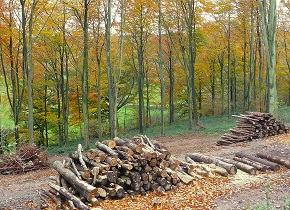
Once upon a time, energy from biomass like wood, manure, whale oil and other sources was the primary supplier of heat, light and food processing. If we should like to … Read more
When researchers discovered the CRISPR-Cas mechanism, it was looked upon as the perfect instrument for genetic modification (GM). But it appears to have its flaws. Flaws that might be inherent … Read more
Dutch primary education has a huge problem, that also affects bio-economy developments. There’s a substantial shortage of teachers, the teaching profession is not appreciated much, and the pay gap with … Read more
When talking of technology, many people nowadays have ICT in mind. But then they neglect the major steps forward taken by the life sciences: all chemical and biological knowledge of … Read more
The Dutch Cabinet has determined missions to tackle major societal issues, and Dutch knowledge sectors are currently drawing up Knowledge and Innovation Agendas on how to support the realisation of … Read more

Evolved by Nature has developed pure liquid silk; properly speaking: silk in solution. This substance will enable yarns to be covered with silk. They will then have the properties that … Read more
Last month, the Ellen MacArthur Foundation completed a series of reports on climate change with a strong message. Don’t just reduce emissions; restructure the economy as well, from a once-through … Read more
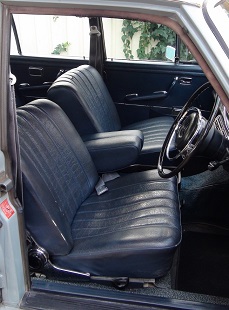
This month, NNFCC’s newsletter highlighted the launch of two biobased leather products. Isn’t all leather biobased then? Yes, but here we mean leather of vegetable origin. The synthetic leather market … Read more
Michael Carus, managing director of the German nova-Institute, has stirred up the plastics debate. While plastic waste is piling up and the seas get filled with plastic soup, Carus makes … Read more
Most of the time we don’t realise it, but there is an antibiotic crisis going on. Our present families of antibiotics become less effective, and each year many people die … Read more
Reductionism, reducing issues to little fragments, is at the basis of our present wealth. It also has a major influence on our social behaviour and our worldview. This may take … Read more
Science rests on reductionism: the reduction of complex issues to digestible bits. From there, researchers try to piece together the bigger picture. But in the life sciences we now see … Read more