Bamboo, a promising feedstock
Bamboo is a promising green feedstock. It is not only used for construction (approximately 1 billion people live in bamboo homes), we can now also make clothing from it and … Read more

Bamboo is a promising green feedstock. It is not only used for construction (approximately 1 billion people live in bamboo homes), we can now also make clothing from it and … Read more
Many social scientists make an appeal to fundamental laws of nature in order to sustain their arguments. Fine, if their interpretation is tenable from a scientific point of view. But … Read more
Less than a year ago, at the Biobased Economy network conference in Amsterdam, we heard Avantium’s Ed de Jong tell the audience that the long-awaited first commercial FDCA plant would … Read more
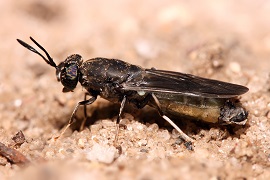
We are underutilising waste, says Eva Gladek, CEO of Metabolic in Amsterdam. It is a very important source for a circular economy. The most important challenge is not technical but … Read more

Metabolic has quickly ascended to leadership in the field of circular economy consultancy in the Netherlands since its establishment in 2012. Recent projects include the bioremediation of a waterfront industrial … Read more
At the recent World Bio Markets conference, president Marcel Lubben of Reverdia delivered an optimistic speech on the future of biobased chemicals. There is a place in the world for … Read more
At Cosun, the age of biorefinery has really begun. Originally a sugar producer, it now looks with a keen eye on the opportunities of value creation from all components of … Read more
Do not use wood just for energy, say WWF and the Mondi Group, an international packaging and paper company, in a recent study performed by nova Institute and IEEP, the … Read more
Biobased chemicals struggle with low energy prices. If they are drop-ins, they have a hard time competing with petrochemicals. Therefore, the case for new, specifically biobased platform chemicals, gets stronger. … Read more
I devoted many words already to the advantages of genetic engineering. On paper, in the form of books and columns, as a speaker at schools, congresses, women’s associations, service clubs, … Read more

Many biobased chemicals and biobased materials suffer from low fossil energy prices – but materials with new properties are still in demand. This was the general opinion at the 9th … Read more
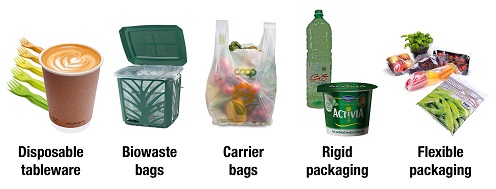
Germany’s nova-Institute has published the first comprehensive market study on the consumption of compostable and biodegradable plastics in Europe, announced managing director Michael Carus at the 9th International Conference on … Read more

On this site we have always been concerned with the question of the shape and size of industry in a bioeconomy. Could it be much less dangerous? Concentrated in major … Read more
At the World Bio Markets conference in Amsterdam, a presentation by Javier Velasco Álvarez of Neol Bio caught my attention. Neol Bio is a technology developer with a focus on … Read more
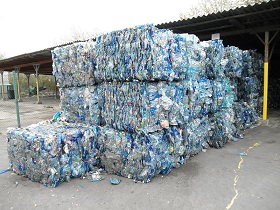
Early this year, the Ellen McArthur Foundation published a policy report ‘The New Plastics Economy, Rethinking the Future of Plastics’. This is an important document, as it wraps up responsible … Read more
Phosphorus is an essential ingredient of life on earth. It is a component of DNA and of bones, and it fulfils a key role in energy transfer in living cells. … Read more
The launch of a new macroeconomic scenario study marked the opening of the ECO-BIO conference in Rotterdam today. Biorenewables fulfil a key role in climate policy and in future economic … Read more
Cellulosic ethanol costs vary greatly among the six units now in operation across the world, according to Lux Research. The single most important factor contributing to the cost differences is … Read more
With great sadness we announce that Paul Reinshagen has passed away, one of the founders and editors of this website. He died this week, 78 years of age. Paul Reinshagen … Read more
Roundup, scientifically called glyphosate, is the most widely used and most widely criticised weed killer. Official studies find over and again that the agent is not very toxic to humans … Read more
‘If you had asked me five years ago which branch of catalysis would gain the upper hand, I would have said biocatalysis,’ says professor Sébastien Paul, head scientist of the … Read more
Coca-Cola and Danone have not yet decided on biobased plastics for their bottles (PET or PEF), but DuPont announces another competitor: PTF. Last month, it published its plans to construct … Read more

‘Consumers will soon notice that the origin of everyday products is changing, with items such as clothing, shoes, water and soda bottles, and even automobile tyres being manufactured from plant-based … Read more
‘The biobased economy might not seem to make much progress right now, because very few major developments are being announced. But behind the scenes, companies make spectacular progress, they will … Read more
Last week, Reverdia and BioAmber announced that they signed a ‘non-assert agreement’. The companies are both involved in the production and commercialisation of biobased succinic acid. They agreed that BioAmber … Read more
Cleantech might have a much better impact on the economy than just sustainable energy. In the large body of literature that investigates the economic effects of climate policy, most economists … Read more
Two weeks ago I visited Cyprus to discuss a pilot project as part of our Alyssum initiative. The alyssum plant can absorb nickel and can concentrate extremely high levels of … Read more
Algae are not going to be the solution to our energy problem. It’s their low productivity, says prof. Kevin Flynn of Swansea University to NNFCC. It’s their high production costs, … Read more
Natural fibre composites are plastics reinforced with natural fibres: mostly wood, bamboo, flax or hemp. They are increasingly used in consumer goods like watchcases, toys, combs and trays. The unique … Read more
It’s been another busy year for the biobased chemicals and fuels team at NNFCC; as 2015 draws to a close we take a look at some of the year’s highlights. … Read more
When in the seventies the discussion on the environmental problem erupted, Wiero Beek, then research director at Unilever, was one of the first industrialists who took the problem seriously. He … Read more
Ludo Diels, senior researcher sustainable chemistry at Vito, the Flemish institute for research of sustainable technologies, is very positive about the future of lignin. This third major wood component (after … Read more
Photanol, based in Amsterdam, has started tests in greenhouses at Bleiswijk (Nl), where cyanobacteria will produce fragrances and flavourings, and intermediates for the chemical industry, with no other feedstock than … Read more
European seed companies are worried about the future. The existing sector – particularly in the Netherlands, Germany and France – is founded upon plant breeders’ rights, but the patent system … Read more
We all know the stories about DDT, fifty years ago – but did we learn from them? Not quite, says Ton Schoot Uiterkamp, a retired – but still very active … Read more
Last week, we could hear everything about the wonderful substance isosorbide, a biobased compound with many useful applications. We were in Lille and its surroundings, on an invitation of the … Read more

Nova-Institute, together with industry and universities (notably the University of York), developed a new tool for policy and investment decisions: the Biomass Utilisation Efficiency (BUE). BUE analysis will answer two … Read more
The development of new polymers is a lengthy and highly underestimated process, says Jan Ravenstijn. Development of new polymers, like new drugs, will roughly cost about two decades and $ … Read more
At EFIB in Brussels last month, Tom Beardslee proudly presented Verdezyne’s achievements in the production of biobased chemicals. His company will be the first to sell biobased dodecanedioic acid in … Read more
In discussions on genetic modification, the name Monsanto invariably produces much controversy. Both its critics and its proponents can be very emotional. We will argue that Monsanto has taken the … Read more
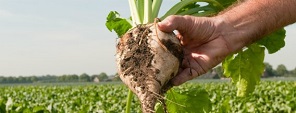
Although some impatience can be heard among the stakeholders of the biobased economy, there are developments – slow but steady. Here we highlight some of them, though this might still … Read more

Recently I attended several biobased networking events where utilization of waste and by-products was discussed. I found these interesting talks; both because my company Abstraction partners with ARN to supply … Read more
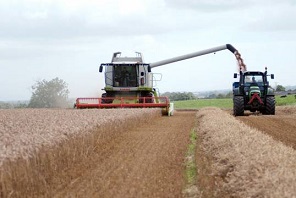
Today at EFIB, some of the main European bioeconomy clusters, from France, Germany, the Netherlands and the UK joined forces as the 3BI intercluster. 3BI is a strategic European partnership … Read more
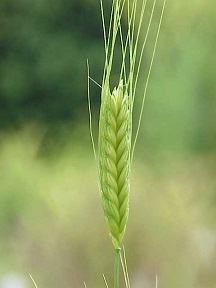
Genetic modification is here to stay, and not just for economic reasons. Many arguments against it do not withstand logical and intellectual scrutiny. But some do, and the GM community … Read more

In preparation for Paris 2015, the new major climate summit, researchers publish many scenarios on the reduction of greenhouse gas production. Over the years, these have become more pessimistic. As … Read more
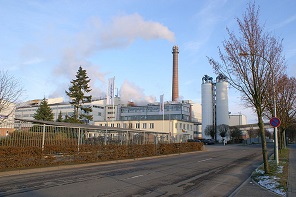
North-western Europe has the best feedstock in the world for biobased industries, says Marc Verbruggen, NatureWorks’ CEO and largest PLA producer in the world. He could have added: also the … Read more
Ecomodernism! It could be a breakthrough in the stalemate between proponents of economic growth and those of radical reforms, e.g. to prevent climate disasters. The term combines elements of both … Read more
Microplastics are a major source of water pollution. The litter found in oceans and inland waters is dominated by plastics. This litter does not only consist of large items like … Read more
Transnatural Design, located in an Amsterdam basement, is an organisation that ‘offers smart design and breath-taking art in which nature & technology come together in unison…. Transnatural explores ways how … Read more
Genetic modification is not a new technology. But a new tool, CRISPR, now elevates it to a much higher level. And op top of that, genetic modification is in the … Read more