Towards a greener orange
At the European Forum for Industrial Biotechnology (EFIB) this week, the stall of the Biorenewables Development Centre served freshly pressed orange juice. At the front of the stall, a large … Read more
At the European Forum for Industrial Biotechnology (EFIB) this week, the stall of the Biorenewables Development Centre served freshly pressed orange juice. At the front of the stall, a large … Read more
The policy in support for biobased energy proves to be an obstacle to better applications of biomass, in the view of BioBTX and KNN, two Groningen based companies. This policy … Read more
Last month, the Danish ombudsman spoke out against Coca-Cola. His verdict amounted to the assertion that the soft drink bottling company had greenwashed the plant bottle: suggested matters to be … Read more

Just a month ago, on August 3rd, we wrote that the European sugar market will open up in 2017, and that in preparation for that event, Dutch farmers/cooperatives now already … Read more
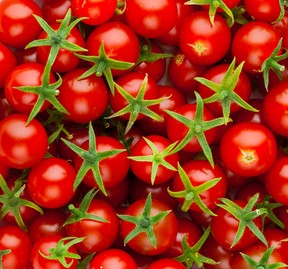
Plants contain many valuable compounds, even in parts usually discarded after the harvest. For instance, waste products from growing paprika (discarded fruit, leaves, binding materials) contain many carbohydrates, sugars and … Read more
Juiciness, that was the missing element in this week’s synthetic burger. But hopes are high. Within twenty years we will all have the opportunity to buy a burger that did … Read more
Synthetic and glass fibres have never completely substituted natural fibres. On the contrary, there is a growing interest for application of natural fibres in composite materials – biobased or not, … Read more

North-western Europe may become a feedstock supplier. Not a supplier of natural gas, but of sugar. A major opportunity for the chemical industry, and a possible breakthrough for the biobased … Read more
Europe has the best feedstock for producing biopolymers, beet sugar, but instead aims at developing cellulosic crops. An example of Europe’s ineffectiveness. ‘A Southeast Asian delegation recently remarked to me: … Read more
Use of biomass feedstock for chemicals and biofuels? The food/fuel discussion is very polarised. But a number of parties have come forward that seek a middle ground in this debate. … Read more
The Western European food chain is very inefficient, says Johan Sanders, professor ‘biobased commodity chemicals’ at Wageningen UR. We could greatly reduce imports, mainly of soy, by improving efficiency. ‘Each … Read more
‘Americans act and deliver, Europeans doubt and talk.’ Says Steve Hartig, General Manager to POET-DSM Advanced Biofuels, the joint venture of the Dutch biotech company and the largest alcohol producer … Read more
Trucks and even airplanes can run on Liquefied Bio Gas. Jan Cees Vogelaar, an innovative farmer in the Dutch province of Flevoland, and founder of HarvestaGG company in Lelystad, has … Read more
Seaweed is an attractive and relatively unknown source of food, feed and chemicals. Growing seaweed needs no land, and therefore it does not compete with other forms of food production. … Read more
In our minds, Photanol is one of the potential winners among start-ups, the company owned by professors Joost Texeira de Mattos and Klaas Hellingwerf of the University of Amsterdam. Their … Read more
We are not heading for the biobased society as a part of the sustainable economy because the fossil era is nearing its end, or because we would be short of … Read more
Biobased polymers will triple in capacity to 12 million tons by 2020. That will equal 3% of total polymer production. The most important biopolymers will be biobased drop-in PET and … Read more
Potatoes contain a lot of proteins. Up to two percent. Moreover, the potato contains its proteins in a special way, i.e. in an aqueous solution. AVEBE, the Dutch potato starch … Read more
In 2015, an entirely new agricultural policy needs to be in place in Europe. Hopefully, this new Common Agricultural Policy (CAP) will offer new opportunities for innovation, and for the … Read more
Three years ago, I attended a DPI (Dutch Polymer Institute) meeting, on the question to what extent sectors had embraced the biobased economy. Everyone present made much of the achievements … Read more
Biomass has a fundamental problem for use in the energy sector. There is not enough of it, and it is too expensive. Fossil industry emits 35 Gton CO2 around the … Read more
If shale gas would have entered the US market five years earlier, this might have had very adverse consequences for the entire biobased economy (BBE). It might even have been … Read more
Sorry, this column on research on the common Dutch citizen’s approach to the biobased economy/society is only available in Dutch. Please mail us (through the contact form) if you are … Read more
Energy throughput in the biosphere is very small, actually. Biomass production from incident light is relatively inefficient, also in Russian wood or Sargasso seaweed. The earth receives an amount of … Read more
Biofuel, fodder, chemical platform chemicals, and high-value specialties production. From algae which grow up to ten times faster than plants in the soil. It has the appearance of the biobased … Read more
Arnoud van Diem, an entrepreneur, and CEO of AF&F (Algae Food & Fuel) and of Biosoil, grows algae at the ACRRES site in Lelystad, the Netherlands. He uses both sunlight … Read more
The very moment Kenneth Epstein, an American venture capitalist, proved by solid data that the biobased economy in the United States is waning, a Reuters message arrived in our e-mail, … Read more
Herman Vermeer is a farmer in the Flevo polder. He grows stew (potatoes, onions, carrots), wheat, rutabaga and tulips on 70 hectares; and he is a partner in a wind … Read more
‘Wood is competitive for heating purposes, the alternative being natural gas (at the retail price for residential heating) or fuel oil,’ says Zwier van Olst. ‘District heating is an excellent … Read more
‘We should again valorise the entire potato.’ In one sentence, AVEBE’s ambition in the biobased economy. In order to realize this goal, the corporation has many ideas for opportunities in … Read more
Carbon dioxide is the final product of the carbon cycle, either by biological processes or by incineration. It disappears into the atmosphere or is taken up in a new photosynthetic … Read more
Will shale gas – soon to be in abundant supply – become a threat to the green chemical industry? Jos Keurentjes (AkzoNobel) judges it too early to make a verdict. … Read more
Novozymes envisages new biorefineries which can process any biobased feedstock into any desired product in a sustainable way. They will be able to process straw, municipal waste, pig farm or … Read more
Seaweed for human consumption. In the Far East, it has been on the menu for ages. In our bioshops it is quite expensive nowadays – but in the Western world, … Read more
Sorry, this column about a discussion in The Hague, 17 September, on biobased business opportunities, is only available in Dutch.
China’s 11th Five-Year Plan contains plans for development of the next generation of biomedical material applications, as the nation seeks to meet the growing demands of an aging population. Its … Read more
In a column on this site, dated 21 August, Lucas Reijnders is of the opinion that presently available bioplastics are more environmentally harmful than the most common fossil-based plastics. He … Read more
Schuttelaar and Partners organise a political café in Nieuwspoort, The Hague, in the afternoon of 17 September. The theme is: ‘Biomass, boundlessly sustainable’. For details, we refer to the Dutch … Read more
Until quite recently, a few developments seemed to be clear, at least to the editors of this website. The economy would become more sustainable by finding alternatives for oil (over … Read more
‘It is easier said than done, in discussions on the biobased economy, to return the minerals to the land. The question often overlooked is, whether the farmer needs them at … Read more
Just for a second, one forgets Europe and feels a one hundred percent Dutchman on a hot Sunday afternoon. Where? In ‘Futureland’. Again please? Right, nowadays that is the name … Read more
Mark Bünger, author of the recent Lux Research report on biochemicals and biomaterials (see the article on this site), holds the opinion that the viability of a green chemical industry … Read more
There still are many obstacles on the road to a fully commercial green chemicals industry. That is the upshot of a study by Boston based Lux Research, ‘Pruning the Cost … Read more
On August 17, 2012, BASF, Cargill and Novozymes signed an agreement to develop technologies to produce acrylic acid from renewable raw materials. Presently, acrylic acid is produced by the oxidation … Read more
Early July, Cargill supplied the first sustainably produced rapeseed oil to Unilever. The shipment covers about 5% of Unilever’s annual demand for rapeseed oil. Within 3 years, Cargill will be … Read more
An estimated production capacity of almost 800.000 tons per year of polylactic acid (PLA) polymer in 2020. That is the outcome of a study by nova-Institute, based in Hurth, Germany. … Read more
It seems to be an article like many thousands that are published each year; a scientific and technological article of the sort that scientists have got to publish for their … Read more
As researchers have discovered commercial pathways to separate cellulose and hemicellulose on a commercial scale, lignin treatment is the next step. And quite more complex. Utrecht University seems well underway … Read more
That is Nathalie Moll’s opinion, secretary-general to Europabio, the Brussels lobby branch of Europe’s biotechnological industry. Industrial biotechnology is growing fast, and is selected as one of six Key Enabling … Read more
It goes without saying that the biobased economy will produce major changes in society. Yet, many people do not realise to what an extent – eventually, the biobased economy will … Read more