The myth of pristine nature
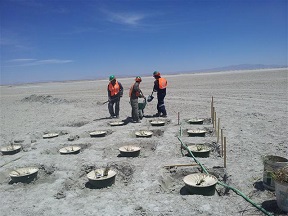
We often assume that ecosystems existed in a pristine state when Western researchers first encountered them. But new research now undermines this concept of pristine nature. Ever since mankind existed, … Read more


Under the skin we are still Darwinists. Meaning that all living creatures are in a state of competition with each other. The strong drive out the weak, that’s how progress … Read more
In the column ‘There is no such thing as an individual’ we mentioned the influence of the microorganisms in our bodies on our development. But biologists have already gone much … Read more
Modern biologists are waging a fierce debate on the meaning of the concept of the individual. Definitions of well-known phenomena like symbiosis and parasitism need to be rephrased. The debate … Read more
In the neoliberal climate that has reigned the past two decades, better efficiency was the ultimate goal of economic policy. So important that it could hardly be challenged. Competing concepts … Read more
The Waltzing with Nature manifesto is a logical sequel to the recent books by the authors, Alle Bruggink and Diederik van der Hoeven. Particularly to their latest book Naturally! Of … Read more
In the 100th year of his life, James Lovelock wrote an important book: Novacene, The Coming Age of Hyperintelligence. A book that astonishes by the broad view of the author. … Read more
The report The better job (in Dutch) by the Netherlands Scientific Council for Government Policy (WRR) is ground-breaking. For the first time in forty (!) years, there is attention for … Read more
Reading the book Naturally! Of course. How nature always keeps surprising us (in Dutch) by Alle Bruggink and Diederik van der Hoeven was a great pleasure to me. Even stronger, … Read more
Reductionism, reducing issues to little fragments, is at the basis of our present wealth. It also has a major influence on our social behaviour and our worldview. This may take … Read more
Science rests on reductionism: the reduction of complex issues to digestible bits. From there, researchers try to piece together the bigger picture. But in the life sciences we now see … Read more
Am I mistaken, or is there really a gradual shift taking place among opinion leaders in favour of genetic modification? Or is it just my perception that changes? Meaning: do … Read more
Solutions for global problems tend to become part of a compromise, says Huub de Groot. He is a professor in biophysical organic chemistry at Leiden University and works, among others, … Read more
Are sustainability and moralism always connected? Proponents of sustainability often suggest (rather than openly say) that it is immoral to pursue non-sustainable development paths – to put the future of … Read more
Encouraged by Dutch top scientist Robbert Dijkgraaf, some internationally reputed scientists got a podium on TV to fantasise on the future, last 16 July. They gave their imagination free rein. … Read more
Imprisonment is the worst criminal punishment available to a European citizen. The long-term loss of freedom is loathsome for human beings, and the incarcerated almost always long for freedom. That … Read more
Recently Ecover, the ‘sustainable cleaning company’, announced a plan to use oil from genetically modified algae as a feedstock for their detergents. They were denounced in the strongest terms by … Read more
Ecomodernism! It could be a breakthrough in the stalemate between proponents of economic growth and those of radical reforms, e.g. to prevent climate disasters. The term combines elements of both … Read more
Industry is going to embrace synthetic biology. It can hardly do otherwise, following the promises of higher yields, purer products and greatly reduced environmental impact. But will their customers accept … Read more
In the tension between sustainability and efficiency something strange is going on: it seems as though the concepts belong to two different worlds, with separate languages. As becomes apparent from … Read more
In fifty years’ time, technology has changed from the bogeyman to the saviour of mankind. Large-scale and energy intensive processes used to be the pinnacle of technology, producing much collateral … Read more
Human error is the label stuck on accidents that cannot be directly explained by the failure of a device, be it mechanical, electric or electronic. But the other side of … Read more
This column has nothing to do with the biobased society. It springs from my participation in an academic discussion. The subject: a philosophical inquiry into scientific explanations; forty years ago, … Read more