Algae: researchers move away from energy
Algae are not going to be the solution to our energy problem. It’s their low productivity, says prof. Kevin Flynn of Swansea University to NNFCC. It’s their high production costs, … Read more

Algae are not going to be the solution to our energy problem. It’s their low productivity, says prof. Kevin Flynn of Swansea University to NNFCC. It’s their high production costs, … Read more
In our interview with Rudy Rabbinge we also discussed the future of agriculture. Can it develop in such a way that it will keep on feeding the world even if … Read more
Nothing is wrong with genetic modification and its application in agriculture (green biotechnology), says Rudy Rabbinge; agriculture needs innovation, and GM technology is helpful in that because it allows us … Read more
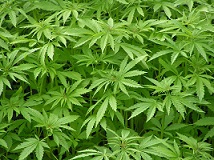
‘Hemp is a very versatile crop,’ says René Sauveur of Pantanova, a Dutch consultancy company in the area of growing and processing hemp. But the market is difficult and needs … Read more
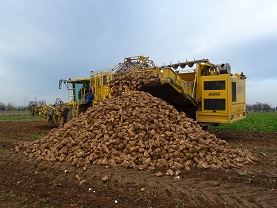
In our first article on green chemistry we stressed the role of bio catalysis. This leads to a preference for feedstock from agriculture, at first in the small-scale fine chemical … Read more
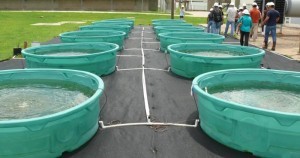
Green, oil-producing algae appear to be able to remove problematic pollutants from waste water. So they clean up the waste and produce fuel at the same time. Researchers of the … Read more
One of the main concerns about world food supply is the production of proteins. Lux Research, in a new study, suggests that ‘the current dominance of meat and seafood will … Read more
The Myco Design Lab of the international art foundation Mediamatic based in Amsterdam, links the worlds of industry and art. This program is about everything we can do with mycelium, … Read more
In the future, we might not blow, mould or cast most of our materials, but grow them. That is, if we embrace mycelium, the ultimate biobased material: fully green, growing … Read more
Nothing is wrong with bioenergy; something is wrong with the ambitions that its proponents have: bioenergy should save the climate. Because that ambition would require the production of biomass in … Read more

‘Companies that consider the construction of a factory for biobased bulk chemicals, will have to consider Europe. Some years ago, this was quite different. Nobody even considered the option of … Read more
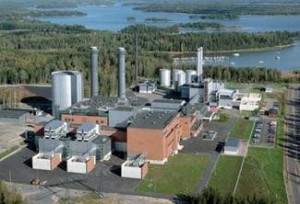
At EFIB, last October, the most brilliant lecture – in my humble opinion – was delivered by Johanna Buchert, a Finnish professor who works at VTT, the Technical Research Centre … Read more
Insect biorefinery. Almost unimaginable, a few years ago. And yet, it is in full development. Its products will come to the market soon. The insect world will show us many … Read more
This is going to be another story than told so far about the development of a green chemical industry in Europe. So far, the news was mostly negative: too little … Read more
Europe should develop a more practical vision on its future sustainable industry, says Dirk Carrez. ‘We do not have to stretch ourselves to be as sustainable and as cost-effective as … Read more

Food supply should have absolute priority, no less so in a biobased economy. Says Rudy Rabbinge, emeritus professor in sustainable development and food security at Wageningen UR. That is why … Read more
In the future, wood fibres can be processed to be as strong as steel, or as soft as cotton. These wood fibres are biodegradable, but stronger than steel or aluminium … Read more

A biobased industry should not copy petrochemical industry’s structure: that structure has been optimised for over a century, for this particular feedstock. In order to compete, the biobased industry should … Read more

If plans work out as projected, Sardinia’s new Matrìca plant in Porto Torres might show the way into a new industrial future for the whole of Europe. The Matrìca project, … Read more
The Dutch agricultural sector has one major problem: an excess of manure production as a consequence of the large livestock population. Dutch livestock farming depends on major imports of soy … Read more
Coffee-roasting house Peeze in Arnhem introduced the first fair-trade and climate-neutral coffee on the market, last month. In the production chain of this fair-trade coffee, CO2 emissions are first reduced … Read more
At EFIB, it was a surprise to me as a Dutchman, living in a country where agriculture is mainly about food crops, to learn that wood biorefinery is important in … Read more
Flax and hemp are making a comeback. Many new products contain these fibres. ‘But the growth does not yet entail large volumes,’ says David Kasse, an agricultural engineer in the … Read more
Entering the hall of the Dutch potato cooperative AVEBE, one’s attention is immediately drawn to a large pane of stained glass, showing all products once produced from the potato, one … Read more
In the Northern provinces of the Netherlands, Ron (son) and Hein (father) Aberson have been pioneering with rapeseed for ten years; they try to establish an autarkic cooperation. SOS, Solar … Read more
Seaweed is on its way to become a serious hype, and a sustainable one. At the second international seaweed conference Seagriculture, in Den Helder and at the Wadden isle of … Read more
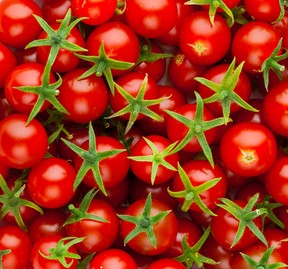
Plants contain many valuable compounds, even in parts usually discarded after the harvest. For instance, waste products from growing paprika (discarded fruit, leaves, binding materials) contain many carbohydrates, sugars and … Read more
Synthetic and glass fibres have never completely substituted natural fibres. On the contrary, there is a growing interest for application of natural fibres in composite materials – biobased or not, … Read more

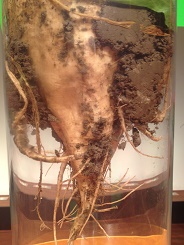
North-western Europe may become a feedstock supplier. Not a supplier of natural gas, but of sugar. A major opportunity for the chemical industry, and a possible breakthrough for the biobased … Read more
Europe has the best feedstock for producing biopolymers, beet sugar, but instead aims at developing cellulosic crops. An example of Europe’s ineffectiveness. ‘A Southeast Asian delegation recently remarked to me: … Read more
Use of biomass feedstock for chemicals and biofuels? The food/fuel discussion is very polarised. But a number of parties have come forward that seek a middle ground in this debate. … Read more
Biomass has a fundamental problem for use in the energy sector. There is not enough of it, and it is too expensive. Fossil industry emits 35 Gton CO2 around the … Read more
‘Wood is competitive for heating purposes, the alternative being natural gas (at the retail price for residential heating) or fuel oil,’ says Zwier van Olst. ‘District heating is an excellent … Read more
‘We should again valorise the entire potato.’ In one sentence, AVEBE’s ambition in the biobased economy. In order to realize this goal, the corporation has many ideas for opportunities in … Read more
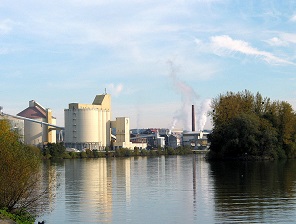
For Cosun, the beet is exceptionally suited as a starting point in the bio-based economy. ‘The sugar beet has by far the highest yield in the Netherlands (and elsewhere), and … Read more
RWE-daughter Essent is the main importer of biomass for energy purposes in the Netherlands. It has gone to great lengths to improve the sustainability of its imports, and in doing … Read more
In the landscape, differences between Niedersachsen and the Northern Netherlands are almost unnoticeable. On both sides of the border, biobased economy is in full development. A lot of research and … Read more
We should take another view of grass, according to Grassa. Cows in meadows are beautiful, but grass contains too much proteins for the cow. Why not extract that excess first? … Read more
‘Cows in the meadow in a real Frisian landscape will always be the subject of romanticism’, says Gjalt de Haan, ‘but the dairy farmer as the producer of milk as … Read more
Dutch Northern provinces could become the centre of algae production and technology. Algae contain proteins, fats and carbohydrates. For their growth they just need heat, carbon dioxide, and minerals from … Read more
In the biofuel debate, it important to distinguish first and second generation technologies. First generation technologies produce biofuel from edible feedstock like starch (from maize), sugar (from sugar cane) or … Read more