The RethinkX project
Over the past few years, the RethinkX project has made the case for yet another revolution to come. Based on major leaps forward in many technologies; in particular in the … Read more
Over the past few years, the RethinkX project has made the case for yet another revolution to come. Based on major leaps forward in many technologies; in particular in the … Read more

The report The better job (in Dutch) by the Netherlands Scientific Council for Government Policy (WRR) is ground-breaking. For the first time in forty (!) years, there is attention for … Read more
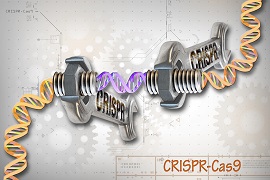
The quest for engineering life is an infinite ‘marketplace’ for science, commerce and society. They are the very stakeholders that will have to decide on the rules of the game: … Read more
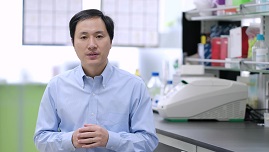
The birth of the hiv-resistant gentech twins Lulu and Nana in China has stirred up the debate on methods and results of modern biotechnology. Rightfully so. The gap between what … Read more
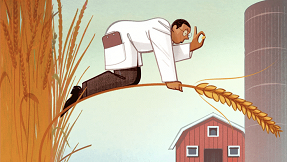
The real sustainability revolution in farming is New Breeding Techniques like CRISPR. Why are organic farmers blocked from using them? This article by David Warmflash was originally published on the … Read more

In four earlier articles we came to the conclusion that geopolitics of fossil, mineral and agricultural resources will become less important. But a new geopolitical dimension quickly rises to the … Read more

The world will have to take another look at renewable energy. We need to start thinking visionary and large-scale. Time is over when solar and wind energies had to adapt … Read more
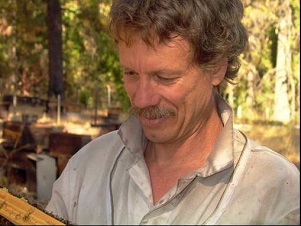
In three columns, I have investigated the question of bee colony collapse and neonicotinoids (neonics), the effect of pesticides on pollinating insects and natural pest predators, and finally the services … Read more

Public judgement surprises biotechnological researchers again and again. Sometimes it is surprisingly favourable, like in the case of the development of artemisinin, an anti-malarial drug, using modified organisms. Often it … Read more

Resistance towards innovative changes is a well-known problem. It troubles many researchers and entrepreneurs, also those who venture into the biobased economy. The science of systems innovation deals with the … Read more
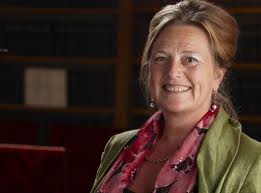
Sustainability is growing in importance for the biobased economy, says Patricia Osseweijer. She is a professor in Science Communication at Delft Technical University, and she heads among others the Biotechnology … Read more

This column has nothing to do with the biobased society. It springs from my participation in an academic discussion. The subject: a philosophical inquiry into scientific explanations; forty years ago, … Read more