Old leftist demons in the perception of sustainability
Old patterns are pervasive in the perception of sustainability. Motor car journalists do not like the Toyota Prius, not because it would be a bad car, but because it has … Read more
Old patterns are pervasive in the perception of sustainability. Motor car journalists do not like the Toyota Prius, not because it would be a bad car, but because it has … Read more
Sorry, this column on Dutch innovation policy and biobased SMEs is only available in Dutch.
There is a lot of emotion in the food/fuel discussion. Of course in the disguise of academic arguments, and supplied with discourses on LCA and ILUC, but nevertheless firmly rooted … Read more
‘Americans act and deliver, Europeans doubt and talk.’ Says Steve Hartig, General Manager to POET-DSM Advanced Biofuels, the joint venture of the Dutch biotech company and the largest alcohol producer … Read more
Generals always seem to be engaged in winning the last war; likewise, the recently installed Dutch Council for the Environment and Infrastructure (RLI), has issued a report on yesterday’s problems. … Read more
Sorry, this review of the sustainable restaurant ‘Aan Zee’ (By the Sea) in Oostvoorne near Rotterdam is only available in Dutch.
Trucks and even airplanes can run on Liquefied Bio Gas. Jan Cees Vogelaar, an innovative farmer in the Dutch province of Flevoland, and founder of HarvestaGG company in Lelystad, has … Read more
Seaweed is an attractive and relatively unknown source of food, feed and chemicals. Growing seaweed needs no land, and therefore it does not compete with other forms of food production. … Read more
There is a firm trend for centralization in decision making in our society. National governments increase their power at the expense of communities and counties; and Europe acts for more … Read more
Sorry, this column on Dutch innovation policy is only available in Dutch.
Even though our highly technological society is vulnerable, this state of affairs is not much addressed by politics or societal debate. And vulnerable we are indeed. Think of the millennium … Read more
Five years after the Lehman Brothers bankruptcy, nothing has been done yet on the set of measures which were thought to be essential at the time; measures which boil down … Read more
In our minds, Photanol is one of the potential winners among start-ups, the company owned by professors Joost Texeira de Mattos and Klaas Hellingwerf of the University of Amsterdam. Their … Read more
We are not heading for the biobased society as a part of the sustainable economy because the fossil era is nearing its end, or because we would be short of … Read more
Biobased polymers will triple in capacity to 12 million tons by 2020. That will equal 3% of total polymer production. The most important biopolymers will be biobased drop-in PET and … Read more
Shale gas is not a threat, it is an opportunity. The whole world will benefit from US coal fired power stations to shift to natural gas, thereby appreciably reducing their … Read more
Sorry, this article on Dutch innovation policy is only available in Dutch.
Potatoes contain a lot of proteins. Up to two percent. Moreover, the potato contains its proteins in a special way, i.e. in an aqueous solution. AVEBE, the Dutch potato starch … Read more
A room in the Chemical Lab of Groningen University (RUG) hosts a revolutionary test equipment. It produces bioBTX through chemical catalysis. This is a mixture of benzene, toluene and xylene, … Read more
In 2015, an entirely new agricultural policy needs to be in place in Europe. Hopefully, this new Common Agricultural Policy (CAP) will offer new opportunities for innovation, and for the … Read more
Farmers handle their knowledge quite differently from large corporations. Fortunately so. For suppose that Shell would have to supply the world with food; it would be a disaster. For in … Read more
In Brussels, civil servants are in the middle of a major project: the revision of Europe’s Common Agricultural Policy, CAP. The future of the biobased economy is heavily dependent on … Read more
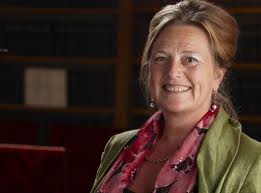
Sustainability is growing in importance for the biobased economy, says Patricia Osseweijer. She is a professor in Science Communication at Delft Technical University, and she heads among others the Biotechnology … Read more
Many scientists from the molecular sciences, like chemists and biotechnologists, regard the use of biomass for energy production almost as a capital sin. It would be equal to burning down … Read more
Three years ago, I attended a DPI (Dutch Polymer Institute) meeting, on the question to what extent sectors had embraced the biobased economy. Everyone present made much of the achievements … Read more
World food reserves are very low. Reserves now amount to two months; strategic oil reserves amount to at least three months. Such low reserves are made possible by major achievements … Read more
Biomass has a fundamental problem for use in the energy sector. There is not enough of it, and it is too expensive. Fossil industry emits 35 Gton CO2 around the … Read more
If shale gas would have entered the US market five years earlier, this might have had very adverse consequences for the entire biobased economy (BBE). It might even have been … Read more
This column has nothing to do with the biobased society. It springs from my participation in an academic discussion. The subject: a philosophical inquiry into scientific explanations; forty years ago, … Read more
Sorry, this column on research on the common Dutch citizen’s approach to the biobased economy/society is only available in Dutch. Please mail us (through the contact form) if you are … Read more
‘I expect artificial photosynthesis to be fully operational in 2050; by that time it will be the backbone of energy supply,’ says Huub de Groot, professor in biophysical organic chemistry … Read more
Energy throughput in the biosphere is very small, actually. Biomass production from incident light is relatively inefficient, also in Russian wood or Sargasso seaweed. The earth receives an amount of … Read more
Will the advent of the biobased society lead to a better world? One the face of it, one would affirm this idea: back to nature, or something like that. Jean-Jacques … Read more
Whereas silicon wafer based PV technology keeps improving and production costs of PV electricity keeps falling, thin film PV is on its way to develop as a mass product as … Read more
Biofuel, fodder, chemical platform chemicals, and high-value specialties production. From algae which grow up to ten times faster than plants in the soil. It has the appearance of the biobased … Read more
Arnoud van Diem, an entrepreneur, and CEO of AF&F (Algae Food & Fuel) and of Biosoil, grows algae at the ACRRES site in Lelystad, the Netherlands. He uses both sunlight … Read more
Sorry, this column on the seventh Dutch biobased economy network meeting in Breda, is only available in Dutch.
The very moment Kenneth Epstein, an American venture capitalist, proved by solid data that the biobased economy in the United States is waning, a Reuters message arrived in our e-mail, … Read more
Canada and China are about to sign a trade agreement which would allow China to develop tar sands in Alberta in exchange for enhanced protection of Canadian companies in China. … Read more
Although the official European Commission policy still rejects GMO products for food (green biotech), there seems to be a policy change in the approach to industrial biotechnology (white biotech). In … Read more
Herman Vermeer is a farmer in the Flevo polder. He grows stew (potatoes, onions, carrots), wheat, rutabaga and tulips on 70 hectares; and he is a partner in a wind … Read more
Climate change is going to disrupt society, that is for sure, says Paul Gilding. We cannot avert disaster any more, as mankind in its stupidity does much too little about … Read more
It strikes me that so many aging, i.e. retired people, attend sustainability conferences. Youngsters are present but mainly on behalf of their employers. Elderly people have been engaged in other … Read more
‘The unsuccessful energy transition stands in the way of the biobased economy,’ says Jan Rotmans. ‘Whereas the energy sector is going to disappear. In the future transition, the chemical sector … Read more
I had looked forward intently to the report that Oxfam in the Netherlands (Oxfam Novib) would publish on 26 November, which would justify its campaign against European biofuel policies. They … Read more
It was a wonderful reunion, Forty years of wind power in the Netherlands, organized by Chris Westra, the man whose self-built wind turbine in 1972 marked the beginning of an … Read more
During advent, almost 50 tons of olivine sand will be dumped on stately Lange Voorhout in The Hague as a construction material for a crib. Olivine is a mineral rock … Read more
Most posters against shale gas have disappeared from the streets and the municipal poster sites. Some cars still show them. But resistance has not faded away. Earlier articles on shale … Read more
Diederik van der Hoeven appears to appreciate our moral position, but questions the practicality. But it is the practical consequences of the EU’s biofuel policy that prompted us to take … Read more
Let nobody accuse the European Commission of not engaging itself in what it calls the bioeconomy. Last month, the Commission held a kind of hearing on the part played by … Read more