
The Dutch grid needs a quite substantial extension in order to solve problems of net congestion. Moreover, it will need to be used more intelligently and flexibly. There are long waiting lists for companies that seek access to the grid. What can the Dutch do? Three things: build more quickly, use the grid more intelligently, and acquire better knowledge through IT- and data management.
Why would a stronger grid be necessary?

In the Netherlands, the share of solar and wind energy in the electricity mix is growing. At the same time, total electricity consumption is on the rise:
- more buildings and dwellings make use of electrically powered heat pumps instead of natural gas
- electric transport is growing at the expense of fossil motor fuels
- industry is expected to make more use of electricity in its drive to make production processes more sustainable.
Demand is expected to rise from 115 TWh in 2023 to 190 TWh in 2035. Moreover, there is the problem of a growing unbalance between demand and supply: because of the growing supply of variable current from solar and wind energy. And peak demand will rise at uncomfortable moments – for instance, because people will connect their electric cars to electricity supply between 19.00 and 20.00 o’clock as they come home in the evening. How can we solve this problem?
Companies look for access to the grid
The number of new connections to the grid by smallholders has been fairly constant (links in Dutch) since 2021 at somewhat over 100,000 per year. That number includes connections for new dwellings, smallholder firms, charging stations and public lighting. But as for larger connections, the situation is totally different. The situation is very dramatic in the applications for businesses at regional network operators. The number of applications has risen from 700 (2022) to over 14,000 now.
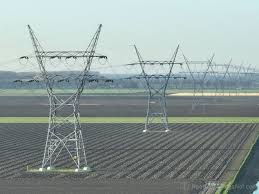
Why do we need a more powerful grid?
The move towards sustainability in Dutch energy use is responsible for the rise of solar and wind energy in the electricity mix. At the same time, total electricity consumption rises, as more buildings and homes make use of electric heat pumps instead of natural gas, and because electric transport makes its way at the expense of fossil fuels. Moreover, expectations are that industry will lean heavier on electricity in its move to make production processes more sustainable.
On top of that, the imbalance between demand and supply is expected to grow, because of major swings in the short term. That has to do with the growing supply of solar and wind, in combination with new forms of peak demand. For instance national supplier Tennet expects an evening peak between 19.00 and 20.00 o’clock, as a growing number of Dutchmen will connect the electric car to the grid as they come home, How can we solve this problem?
Companies in problems when looking for a connection to the grid
The consequences of grid congestion are most acute for the major users of electric current. The situation is most dramatic for business applicants for electricity at regional grid companies. The number of applications has risen from 700 in 2022 to over 14,000 now. The situation is so dramatic that older applications are being withdrawn already. Moreover, there is a waiting list for business applications for permission to deliver electricity to the net; for instance by parties that exploit solar parks or battery storage.
Against this background, it is interesting to have a look at the goals of enlarging the national grid in the next twenty-five years. For that period, grid companies have formulated the following goals:
- a yearly increase of at least 27 extra high- and mid-tension stations, much more than in the recent past
- some 2,000 extra transformers yearly, about the number realized in the recent past.
An important challenge in the national grid extension is in the struggle for space. Of the 251 extension projects of Tennet, 71 were actually constructed. A strong commitment is required to realise the remaining 180 in a reasonable term. Realising a shorter permit procedure may be an important part of the solution.

Decentralized solutions
Thousands of entrepreneurs face problems with grid congestion. For the longer term, extending the national grid is crucial; but in the meantime, decentralized solutions are also considered, in order to relieve the national grid.
There are several ways in which a decentralized approach can help businesses to overcome problems of grid congestion. That has to do with the specific needs of individual companies. At least four problems often return:
- At what level of the grid does grid congestion play a role? There is a big difference between the challenges for a company that would like to have a connection through the high-tension grid, ruled by national supervisor TenneT; alternatively, the grid congestion plays at the level of mid- and low-tension, where regional grid supervisors rule the grid.
- Challenge grid congestion individually or as part of a group approach? An enterprise can shorten waiting time for a new connection individually with (for instance) extra battery capacity. Or one can look for a decentralized solution for a group of companies, through an energy hub.
- What is the part played by grid owners in decentralized solutions? At present, the major stoppage is with regional grid owners. They need to treat a waiting list of over 14,000 applications for delivery of current and over 8,500 demands for connection to the grid.
- Is current the problem, or rather anticipation of the sustainable transition? In the case of industry, a broader sustainability issue might be at play. For instance, in the case of heat for industrial processes, the substitution of natural gas by renewable sources will play a role. In that case, decentralized heat solutions may help alleviating the need for electricity from the national grid.
Considering these points, here are six examples of decentralized solutions for grid congestion:
#1 Batteries and generators for companies in the waiting list
Companies in the waiting list at regional distributors often need connections to the grid, just a bit heavier than typical smallholders connections. Decentralized solutions might offer a practical roundabout. For instance, the provider of mobile battery systems Greener offers a so-called gridsync system that can solve problems around net congestion with fixed connections for ships. A mobile battery with a generator can also function as a kind of microgrid. In the same vein, they helped a new distribution centre of a home improvement store with a grid connection that proved to be too small.
#2 Private network for connection to the national grid
Suppose you own a new solar park, but on the regional scale the mid-tension network is full already. How to get a connection then to the national grid for your solar park? Development company of green energy systems Novar came up with an innovative solution to connect Groningen solar parks Eekerpolder and Evenreiten to the grid; they built a piece of private mid-tension grid themselves. Novar has developed a so-called closed distribution system by installing a 33,000 Volt cable between the solar parks and a transformer station. Through that station, the current is transformed to 220,000 Volt for connection to Tennet’s high-tension network.
#3 Private network, open to third parties
One step further is in the Smart Grid Flevoland, in which technical service company Equans plays an important role. At present, some 500,000 solar panels and 37 wind turbines have been connected to this closed distribution system, with a branch to Tennet’s high-tension grid. But the aim is to connect local production of renewable energy to demand for electric current from local companies through the smart grid. Although this will still need a separate exemption by the ACM.
#4 Energy hub for decentralized electricity distribution
The Smart Grid Flevoland is a step on the way to the formation of a decentralized hub; that’s a development in many parts of the Netherlands. An example of an all-electric hub is the project at industrial area Pannenweg II in the Limburg community of Nederweert. There, local entrepreneurs got together, planning for installing rooftop solar panels, combined with battery storage, an energy management system and an energy trading platform, intended to produce and use energy as a group.
#5 Multi-commodity energy hub: current, hydrogen and heat
In comparison to an all-electric hub, the ambition level of muti-commodity hubs (combining electricity, heat and hydrogen) is still somewhat higher. Such an energy hub will be realised at industrial estate De Mars in Zutphen. A major copper smelter in the area would like to become sustainable and can supply a heavy grid connection. Moreover, wind park IJsselwijd has three wind turbines in development that could in principle be connected to the energy hub. Although the wind park itself is still waiting for a definitive approval.
In this energy hub as well, liability claims prove to be part of a difficult puzzle. That has to do, among other items, with the so-called cross-default risks: if one company in the hub can no longer fulfil its obligations due to a bankruptcy, it will have consequences for the other participants. Participating companies will have to accept a certain amount of risk, but at the same time there is an urgent need for new forms of insurance with for instance a collective guarantee.
#6 Solutions made to measure for industrial heat
In the heat demand of industrial companies, net congestion might mean an important impediment to better sustainability. A company might replace natural gas for heating by an e-boiler, but that is risky in case there would be not enough current available. Company Suncom offers an innovative solution for this problem: it will be able to deliver high-temperature heat through concentrating solar mirrors. As the sun doesn’t always shine, this will in practice mean a combined solution with a temporary heat pump and natural gas as a backup. In that way, the company involved can guarantee a stable delivery of heat in which demand on the grid will be minimized.
In short
In many situations, solutions can be developed. It will require some creativity, but solutions can be found for companies that would like to become more sustainable.
Interesting? Then also read:
The overcrowded electricity grid
Local grid optimization
Tension on the Dutch grid